
What's Hot

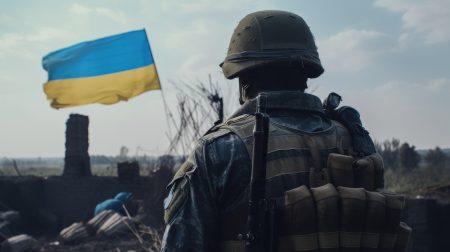
The EU assistance mission EUMAM Ukraine, which bears a significant Czech footprint, has already helped train more than 85,000 members of the Ukrainian armed forces. In the future, it could expand directly onto the territory of the attacked state. European…
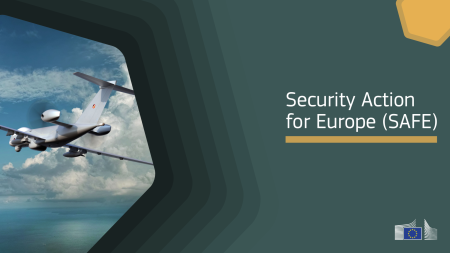
The Romanian government presented in late January the projects included in the EU’s SAFE program. With an allocation of €16.6 billion, Romania ranks second among beneficiary countries, after Poland. Funds from the SAFE program take the form of a 45-year…
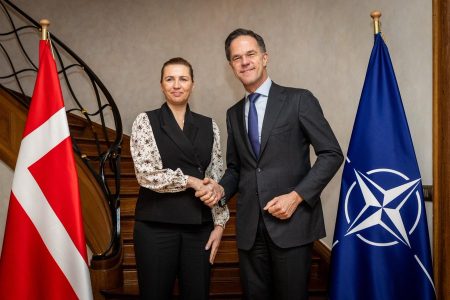
Threats toward Greenland are putting NATO to a test like never before. The stakes are not merely the Arctic, but the credibility of the entire European security system – especially on its Eastern flank. NATO’s measured response to Donald Trump’s…
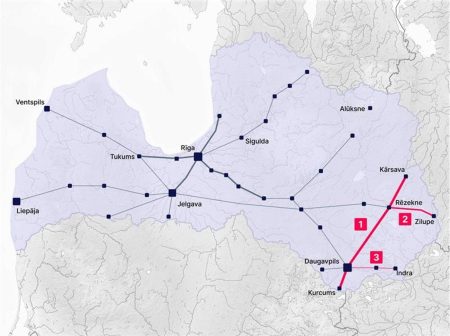
Dismantling the railway in the border region is a matter of political courage. Imagine that you are guarding a house with five doors. Only one of them is used, but the others are left unlocked. Wouldn’t it be easier for…
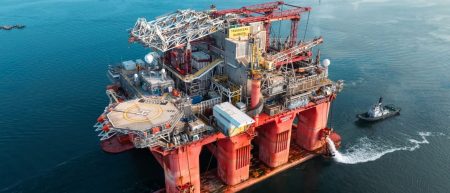
Romania’s Chief of Defense Staff, General Vlad Gheorghiță, recently said that the Neptun Deep area in the Black Sea is not covered by NATO’s Article 5. Starting from the provision of Article 5 of the NATO Treaty, which states that…
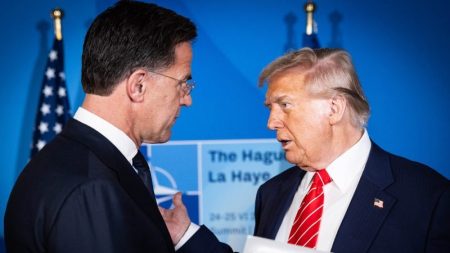
U.S. President Donald Trump announced the framework of an agreement on Greenland that he reportedly developed yesterday alongside NATO Secretary General Mark Rutte. What does the U.S.-NATO accord entail? On Wednesday, August 21, U.S. President Donald Trump announced on his…
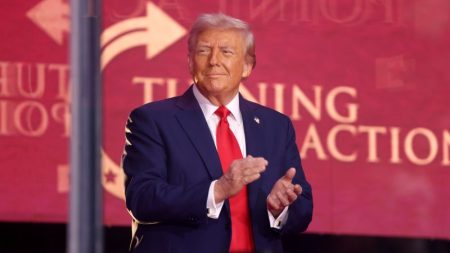
The U.S. President has established the so-called Board of Peace. What is the purpose of this body, and which countries have already backed the initiative? Here’s everything you need to know about Donald Trump’s new project. The Board, which Donald…
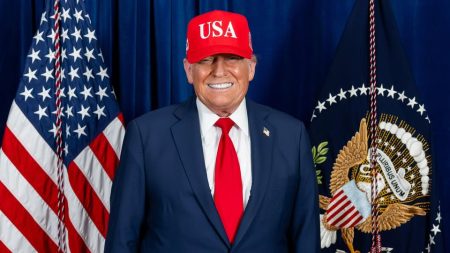
Donald Trump has made it strikingly clear that, in transatlantic relations, Europe is no longer an automatic strategic partner for the United States. American security guarantees now appear to depend more on political and financial interests than on shared values.…
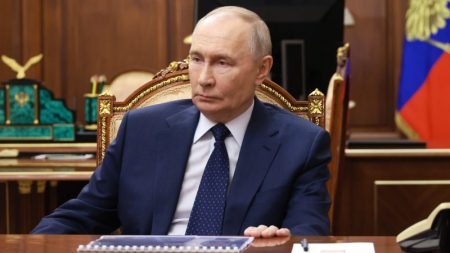
The Russian government rejects claims that financial constraints are preventing the country from continuing its military operations. Moscow is actively strengthening its defense industry, and weapons tested on the front lines have attracted interest from numerous countries, according to Deputy…
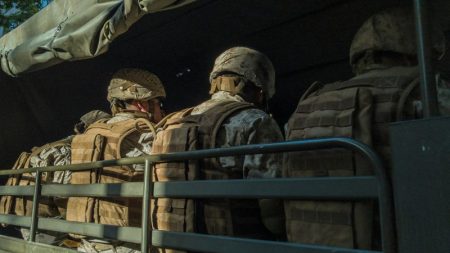
London and Paris have signed a declaration of intent to deploy troops to Ukraine in the event of a peace agreement with Russia. However, the target number of soldiers has been sharply revised downward—from an initially planned 64,000 to just…
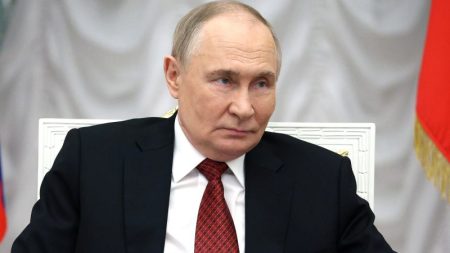
The country will be able to conduct large-scale military operations for at least the next two years, but the costs will continue to rise: higher inflation, a larger budget deficit, and escalating social tensions. This is the conclusion of analyses by international research institutes.
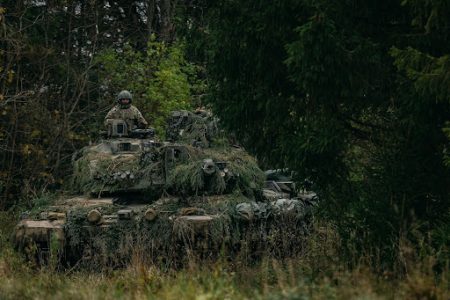
A week before Christmas, media outlets picked up a warning from German CDU MP Roderich Kiesewetter. In an interview with Germany’s N-TV, he claimed that Russia was “training hundreds of thousands of soldiers who will not be deployed to Ukraine”. According to him, they are stationed in the territory of collaborating Belarus and are prepared to attack NATO in the future. He estimated the number of such troops at between 350,000 and 360,000.
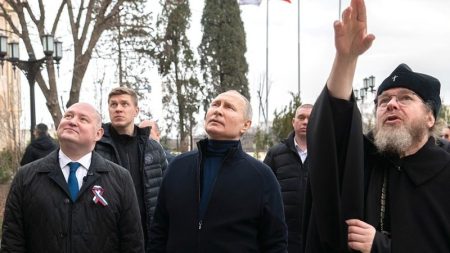
In 2025, Moscow is allocating as much as 40% of the federal budget to military and security purposes, equivalent to 7.2% of GDP. Defence Minister Andrei Belousov revealed that 80% of the defence budget — more than 11 trillion roubles — is being channelled directly into financing the war in Ukraine.
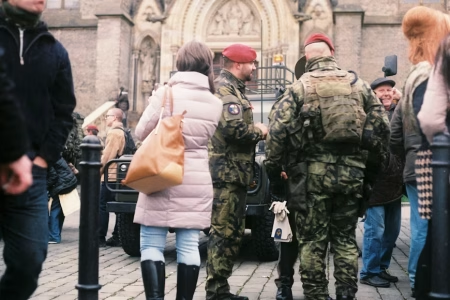
Europe is facing the most profound shift in defence policy since the collapse of the Warsaw Pact. The post–Cold War consensus—built on the assumption that large conscript armies were a relic of the past—has crumbled with the return of high-intensity warfare.
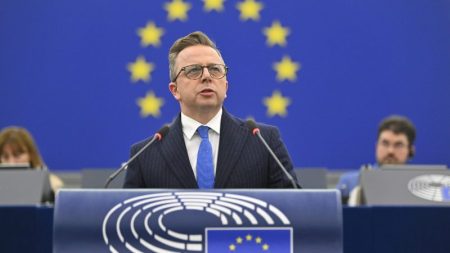
MEPs have backed a resolution calling for the creation of a military version of the Schengen area. The idea is to remove internal barriers to the movement of troops and military equipment across the EU, alongside large-scale upgrades of railways, roads, tunnels and bridges.
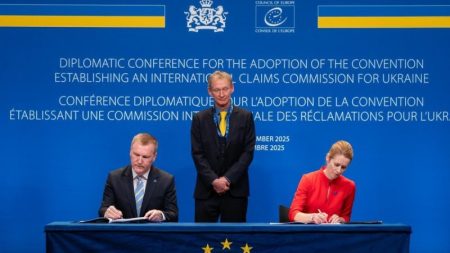
The European Union has formally joined an international convention establishing a claims commission for Ukraine. The signing ceremony took place in The Hague, attended by EU High Representative for Foreign Affairs Kaja Kallas and Commissioner for JusticeMichael McGrath.