


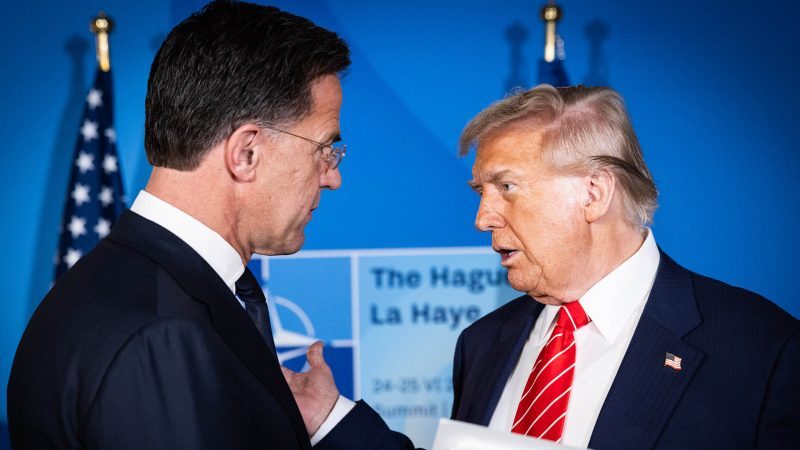
U.S. President Donald Trump announced the framework of an agreement on Greenland that he reportedly developed yesterday alongside NATO Secretary General Mark Rutte. What does the U.S.-NATO accord entail?
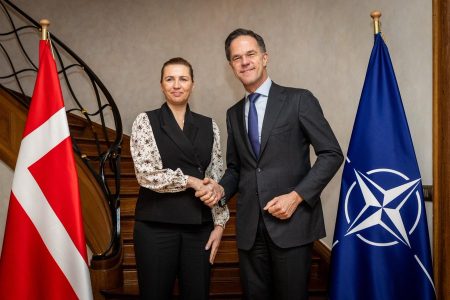
On Wednesday, August 21, U.S. President Donald Trump announced on his social media platform, Truth Social, that during the World Economic Forum in Davos, Switzerland, he had reached a framework agreement with NATO Secretary General Mark Rutte.
“Following a very productive meeting with NATO Secretary General Mark Rutte, we have developed the framework for a future agreement regarding Greenland,” Trump wrote. He did not provide further details, noting only that discussions would continue to finalize the agreement.
When asked by a journalist whether the Greenland framework mentioned by Trump implied continued Danish control over the territory, Rutte replied, “That issue did not come up in today’s discussions.”
According to Rutte, Trump is “largely focused on what needs to be done to protect this vast Arctic region – an area undergoing significant changes, where both China and Russia are becoming increasingly active – and how we can secure it.”
So what, if anything, did the U.S. president and the Dutch official actually agree on? Here’s a summary of what is currently known.
Danish sovereignty or transfer of part of the territory?
The agreement reached between Rutte and Trump regarding Greenland is essentially what “the Danes have been offering to the Americans over the past twelve months,” said a senior EU diplomat, cited by EURACTIV.com.
At the same time, the diplomat added that he knows “nothing” about whether the agreement includes formal recognition of U.S. sovereignty over their military bases.
“There are no details, only a very general framework outline,” he stated.
Axios, citing its sources, reported that Stoltenberg’s initiative assumes recognition of Danish sovereignty over Greenland. The site notes that this aligns with a long-standing request from the Danish side.
According to reports from The New York Times, however, one of the ideas being considered was the transfer by Denmark of sovereignty over small areas of Greenland where the United States would plan to establish military bases.
Greenlandic MP: “Nothing About Us Without Us”
According to BBC, there is a strong sense in Denmark that the matter is far from settled and that any agreement must be negotiated jointly by Greenland, Denmark, and the U.S.—not solely by the U.S. president and the NATO chief.
Danish Prime Minister Mette Frederiksen emphasized that Denmark can negotiate “on all political matters – security, investment, and the economy.” “But we cannot negotiate our sovereignty. I was also informed that this was not part of the discussions,” she said yesterday.
Greenlandic MP Aaja Chemnitz, representing Greenland in the Danish Parliament, stressed that NATO “has absolutely no right to negotiate anything without us, the Greenlanders.” “Nothing about us without us,” she added.
British Foreign Secretary Yvette Cooper expressed hope that this would lead to “direct talks, as requested by Denmark, involving Denmark, Greenland, and the U.S., concerning future actions around Greenland and the protection of its sovereignty.”
The insistence from Denmark and Greenland that sovereignty is non-negotiable appears to respond to The New York Times reports suggesting that one option being considered was for Denmark to cede sovereignty over small parts of Greenland where the U.S. might establish military bases.
White House spokesperson Karoline Leavitt noted that discussions on the details are still ongoing and that outcomes will only be made public once negotiations are concluded.
The plan would revise the 1951 defense agreement between the U.S. and Denmark, which governs American military presence in Greenland. It would also aim to strengthen the island’s security, intensify NATO activity in the Arctic region, and support additional initiatives related to natural resources.
Rutte on Arctic Defense
The NATO chief told Reuters that the framework agreement on Greenland, reached with Trump, will require NATO allies to increase their commitment to Arctic security, with the first results expected later this year.
“We will meet within NATO with our top military commanders to determine what needs to be done,” he said. Rutte remained optimistic. “I have no doubt that we can strengthen our Arctic efforts fairly quickly,” he added, noting that he hopes this will happen later this year—or even at the very beginning of it.
He also pointed out that Wednesday’s meeting with Trump in Davos did not cover mineral exploitation. Negotiations over the Arctic island will continue between the United States, Denmark, and Greenland itself.
He emphasized that enhancing NATO’s presence in the Arctic will not come at the expense of support for Ukraine, which relies heavily on military assistance from Alliance members in its war with Russia.
Earlier, Rutte said he had a “very good conversation” with Trump about how NATO allies can work together to ensure security in the Arctic—not just in Greenland, but also across the seven NATO countries with territories in the region.
“One of the priorities that emerged from the meeting is to ensure that neither China nor Russia gains access to Greenland’s economy or, militarily, to the island itself,” Rutte added during a panel at the World Economic Forum in Davos.
Tusk: “Let’s Stay the Course”
Meanwhile, in Brussels, on the sidelines of the extraordinary European Union summit, a meeting of Baltic and Nordic leaders took place, hosted by Poland.
Polish Prime Minister Donald Tusk described the Greenland issue as a test of the maturity of international cooperation, emphasizing that any disputes should be resolved through civilized means, without coercion or threats.
“I am absolutely convinced that coercion cannot be used in relations with partners,” the Polish leader said. Referring to recent decisions and announcements by the Trump administration regarding the imposition of tariffs on countries that sent troops to Greenland, Tusk stressed that although Europe-U.S. relations are experiencing a challenging period, they are not threatened in the long term.
“Thanks to decades of transatlantic ties, Poland is free and secure. Regardless of various tensions and crises, community has always prevailed. Let’s persevere,” Tusk urged, while ruling out the deployment of Polish forces to Greenland.
“No, we are not planning to send Polish soldiers to Greenland,” he assured reporters.
“Such a step would be the end of the world as we know it, based on NATO solidarity. (…) You know my critical view on many events taking place across the Atlantic. I can only say what I have always known: unfortunately, no scenario can be ruled out given the actions of President Trump’s administration so far,” he added.
Earlier, small military contingents had been sent to Greenland by France, Sweden, and Norway, among others. According to Newsweek and Radio ZET, Tusk was in favor of sending Polish troops to the island to strengthen Poland’s position within the European Union. Deputy Prime Minister Władysław Kosiniak-Kamysz reportedly opposed the idea.
Following Tusk’s official statement that Polish troops would not be deployed to Greenland, Foreign Minister Radosław Sikorski noted that even if the government decided otherwise, implementation would require the consent of President Karol Nawrocki. A refusal from the president, should the government submit a request, would significantly weaken Poland’s position in the EU.
Why Trump Wants Greenland?
Trump claims that Greenland is crucial for his plan to build a “Golden Dome” to protect the United States from missile attacks by Russia and China. European allies could potentially cooperate in this project.
Importantly, the island holds vast and largely untapped reserves of rare earth metals, many of which are critical for technologies such as smartphones and electric vehicles. Trump did not explicitly state that the U.S. is seeking Greenland’s resources but said that bringing the island under U.S. control “puts everyone in a very good position, especially regarding security and mineral resources.”