


Responding to the lowest level of irregular border crossings since 2021, the European Commission has unveiled a five-year strategy for managing asylum and migration. Brussels is focusing on diplomacy and technology, while Warsaw has extended the validity of its restricted border zone.
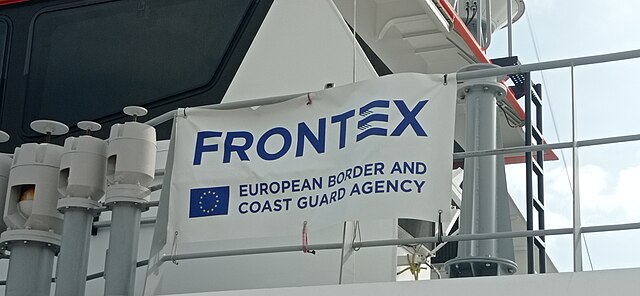
The Commission’s strategy comes at a time when preliminary Frontex data confirm a significant improvement at the EU’s external borders. The European Border and Coast Guard Agency recorded nearly 178,000 detected irregular crossings in 2025 — 26% fewer than the previous year. This is the lowest level since 2021 and less than half of the number recorded in 2023.
“This decline shows that cooperation can deliver results. But it is not an invitation to relax. Our responsibility is to remain vigilant, support member states on the ground, and ensure that Europe is ready for new challenges at its borders,” said Frontex Executive Director Hans Leijtens.
The decrease affected most of the main migration routes. The Western African route saw a reduction of around two-thirds, driven by a sharp fall in departures from Mauritania, Morocco, and Senegal. On the Western Balkans route, detections dropped by 42%, while irregular crossings at the eastern land border fell by 37%.
The Central Mediterranean route remained the most active, with 66,328 cases, while the Western Mediterranean route saw a 14% increase, mainly due to a rise in departures from Algeria.
“The trend is moving in the right direction, but the risk has not disappeared,” Leijtens added.
The broader decline in irregular crossings is partly the result of EU agreements with third countries aimed at limiting migration flows from Africa and Asia. However, this success is closely linked to the EU’s growing dependence on cooperation with authoritarian regimes in managing migration.
Statistics: over one-third drop
The Polish-Belarusian border remains a flashpoint in the ongoing hybrid war, with Belarus accused of using migration as a political tool since 2021.
A 37% reduction in irregular crossings on the Polish-Belarusian land border sends a significant signal amid the ongoing migration crisis. The EU accuses Alexandr Lukashenko’s regime of waging a hybrid war by deliberately directing migrants to the border, seen as retaliation for EU sanctions related to the war in Ukraine.
In 2025, the Polish Border Guard recorded around 30,000 attempted illegal crossings from Belarus, a slight decrease from over 30,400 in 2024.
The decline reflects the effectiveness of tightened border controls, but also highlights the increasingly sophisticated activities of smugglers and the tactics of smaller groups. Frontex warns that risks remain despite positive trends.
At the same time, Warsaw has extended the restricted border zone and reinforced patrols, crediting these measures with limiting migration flows. However, the expansion of the border barrier and allegations of turning migrants back have drawn criticism from NGOs over human rights concerns.
Brussels holds the line despite progress
“The priority is clear: reduce illegal arrivals and keep them low. Abuse damages migration’s reputation, undermines public trust, and ultimately limits our ability to provide protection while weakening efforts to attract talent,” emphasized Magnus Brunner, EU Commissioner for Home Affairs and Migration.
Frontex, however, warns that Europe’s border situation remains fragile. Migration pressure can shift quickly between routes, driven by conflicts, instability, and smuggling networks. The EU is also facing attempts by hostile actors to exploit migration flows to exert pressure on its external borders.
The year 2026 will be crucial for European border management. The EU Pact on Migration and Asylum will fully enter into force in June, marking the most ambitious reform of Europe’s migration and asylum system in years.
Frontex notes that, barring a major geopolitical escalation in the EU’s neighborhood, irregular migration to Europe could continue the downward trend observed since 2023 — provided cooperation with countries of origin and transit continues and Europe remains ready to respond to sudden shifts.
Pillars of the new policy
The Regulation on Asylum and Migration Management requires the Commission to develop a long-term European strategy setting out the EU’s strategic approach. The document outlines actions aimed at achieving three main objectives: preventing irregular migration and dismantling smuggling networks; protecting people fleeing war and persecution while preventing system abuse; and attracting talent to the EU to enhance the competitiveness of member states’ economies.
The strategy reaffirms the principle that Europe decides who enters the EU and under what circumstances. All measures are based on respect for fundamental rights, in line with the Charter of Fundamental Rights, and comply with the EU’s international obligations
Migration diplomacy in the spotlight
The first of five operational priorities is to strengthen migration diplomacy. The Commission, together with member states, aims to deepen cooperation with international partners by developing comprehensive, mutually beneficial partnerships and leveraging incentives such as visa policies, trade, and financial support.
The strategy calls for a “whole-route” approach, helping partners build resilient and humane migration and asylum frameworks, including protection for migrants near their countries of origin. Multi-purpose centres along migration routes are expected to provide innovative ways to manage migration in collaboration with partner countries.
The Commission also plans to further intensify the global fight against migrant smuggling to prevent dangerous journeys. This will include a strengthened international alliance, new tools to track illegal financial flows and digital activity, and a new sanctions system.
Digital Revolution in Border Management
The second priority focuses on strengthening the EU’s borders through the creation of a modern digital border management system. From June this year, all cases of irregular entry into the Union will be checked, with procedures applied at external borders under the Migration and Asylum Pact.
A key element will be the introduction of the Entry/Exit System (EES) and the launch of the European Travel Information and Authorisation System (ETIAS) later this year. A review of the regulation establishing Frontex is also planned to further strengthen the agency’s role.
The third priority — a robust, fair, and flexible asylum and migration system — will be ensured through full implementation of the Migration and Asylum Pact. The Commission will support national authorities with dedicated teams and additional funding of €3 billion to help implement the new rules.
The fourth priority focuses on more effective returns and readmission. Currently, only about one in four people ordered to leave the EU actually returns. The Commission plans to create a common European return system, featuring stronger rules, digital processes, and innovative solutions, such as dedicated return centres.
Competing for talent amid labor shortages
The fifth priority focuses on workforce and talent mobility. Over the next five years, many key sectors will face growing shortages of skilled workers, driven in part by demographic changes. The EU plans to scale up existing talent partnerships, launch new ones, simplify rules, and combat illegal employment and exploitation of migrant workers.
The strategy also promotes full use of digital tools and artificial intelligence in asylum and migration management. This year, a forum on AI in migration will be established to provide member states with modern, safer, and more effective tools to improve the quality, consistency, and timeliness of decision-making, while enhancing security.
€81 billion needed for implementation
To support implementation, the EU will strategically use funding outlined in the Commission’s proposals for the 2028–2034 Multiannual Financial Framework. This includes at least €81 billion for internal affairs and the “Global Europe” instrument. EU agencies will provide strengthened operational support to member states.
“In recent years, we have made significant progress in migration and asylum management. Now it is time to look ahead: we must fully implement the Pact and adapt our asylum and migration system to future challenges,” said Henna Virkkunen, Executive Vice-President for Technological Sovereignty, Security, and Democracy.
“We must, in particular, continue efforts to reduce irregular migration while encouraging legal pathways to the EU. Both are necessary for our system to function and for our societies and economies to thrive,” Virkkunen added.