


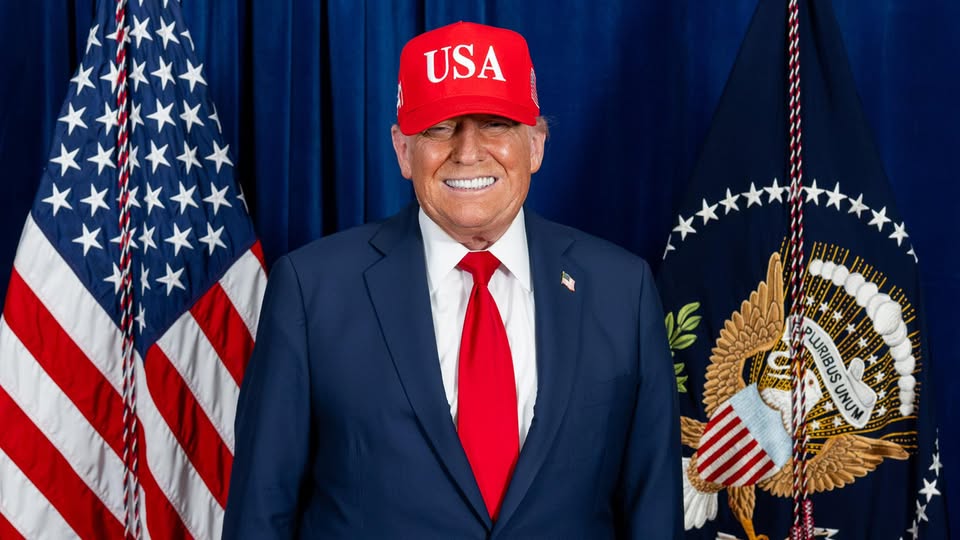
Donald Trump has made it strikingly clear that, in transatlantic relations, Europe is no longer an automatic strategic partner for the United States. American security guarantees now appear to depend more on political and financial interests than on shared values.
Donald Trump’s radical actions against the leader of Venezuela came as a shock to Europe—both because of their scale and the manner in which the military operation resulted in Nicolás Maduro being captured.
Trump cited the fight against drug cartels as the main reason for the intervention, arguing that, according to the White House, they had penetrated Venezuelan state structures and posed a threat to the security of citizens and U.S. interests.
The American administration announced that the operation was a success, and U.S. media described it as a signal of Washington’s return to a more aggressive policy in the region.
The United States also suggested the possibility of extending actions to other countries in the region, including Mexico and Colombia, if it judged their efforts to be insufficiently effective in combating organized crim
The Return of a More Aggressive U.S. Foreign Policy
Experts point out that in justifying his decisions, Donald Trump increasingly adopts the language and logic of imperial politics, based on dividing the world into spheres of influence. He openly invokes the Monroe Doctrine, under which the United States regarded the nations of the Americas as its natural sphere of influence.
“In reality, it’s not so much the original Monroe Doctrine, but its later extension by Theodore Roosevelt,” clarifies Prof. Bohdan Szklarski, an American studies expert at the University of Warsaw, in an interview with EURACTIV.pl.
“According to Roosevelt’s so‑called extension, the U.S. claimed the right to intervene in countries deemed failed or unstable if they could not maintain order, meet their obligations, or protect foreigners. This is precisely the logic Trump applied in Venezuela,” he explains.
A return to a world divided into spheres of influence is clearly troubling news for Central and Eastern European countries. “If Trump continues this aggressive approach, the Kremlin will only be pleased,” Szklarski warns.
The radicalization of the U.S. president’s actions is not entirely unexpected, as Trump had already signaled during his first term that he was receptive to this kind of approach. Yet it should be remembered that during his initial presidency, he was surrounded by members of the Republican establishment, many of whom were genuinely loyal to the state and its institutions, and acted as a brake on his most extreme proposals.
In this regard, Trump has learned his lesson – though not in the way many might have hoped. “His current advisors are loyal only to the head of state. And that is a very dangerous situation,” Szklarski notes.
Greenland: A Test of NATO’s Resilience
The consequences of the radicalization of U.S. policy are becoming increasingly visible in the tense situation surrounding Greenland. While the island is an autonomous territory under Danish sovereignty, it is geographically part of North America – fitting neatly into Trump’s narrative of U.S. dominance over its “own” hemisphere.
Even more crucial is Greenland’s strategic location between the Atlantic and the Arctic, which, from the U.S. perspective, is vital for the defense of North America and control over key maritime and military routes.
The island also hosts the U.S. military base at Pituffik, essential for early warning systems and monitoring both airspace and outer space. Meanwhile, the melting Arctic ice is opening new trade routes and access to valuable natural resources, including rare earth metals.
Donald Trump has repeatedly stressed that the U.S. must maintain a presence in Greenland, framing the issue starkly: “We will do something about Greenland, whether anyone likes it or not,” he said recently. He has also warned that without American oversight, the island could fall under Russian or Chinese influence.
Any conflict over Greenland would be extremely destabilizing for Europe and NATO. “We have already seen disputes between NATO members, such as Greece and Turkey,” explains Marek Menkiszak, head of the Russian Studies Team at the Center for Eastern Studies.
Yet he emphasizes that the current situation is unprecedented, as the United States leads the Alliance. “If this issue escalates, it could trigger a truly serious crisis,” he warns.
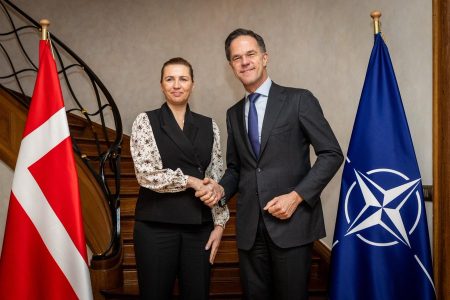
Danish officials, including Prime Minister Mette Frederiksen, have voiced similar concerns. Frederiksen warned bluntly that a conflict between allies “would effectively mean the end of NATO.”
As a result, Europe and other NATO member states are watching Greenland with growing concern, focusing their efforts on calming tensions and avoiding escalation
Putin Watches as Events Unfold
The mood in the Kremlin is entirely different – though even there, a degree of caution prevails. Russia’s response to both the U.S. operation in Venezuela and the tensions over Greenland has been relatively measured, despite the fact that both situations threaten Russian interests.
Kremlin spokesman Dmitry Peskov stated that Russia is “watching very closely” the developments surrounding Greenland and Trump’s plans. Official Moscow statements emphasize the Arctic’s strategic importance while simultaneously expressing a desire to maintain peace and stability in the region.
Moscow is taking a similar approach regarding Venezuela. While it condemned the U.S. actions and questioned their legality – labeling them an act of aggression and a violation of international law – Russia has taken no concrete retaliatory steps.
“Vladimir Putin’s hands are somewhat tied. He has invested in his relationship with Trump and doesn’t want to jeopardize it now. Russia’s priority is currently to pit America against Europe and NATO and to isolate Ukraine from U.S. support,” explains Marek Menkiszak, head of the Russian Studies Team at the Center for Eastern Studies.
However, the crisis in Venezuela carries negative consequences for Moscow that cannot be ignored. “Above all, Russia’s image as a reliable ally has suffered,” Menkiszak notes.
“Russia and Venezuela shared close political and military ties, including arms sales, training, and advisory support. The U.S. operation demonstrated, however, that Russian equipment failed to deliver and did not provide real protection against an adversary,” he adds.
The situation has highlighted, especially to Moscow’s allies, that Russia is an unreliable arms exporter. Additionally, public discourse increasingly draws unfavorable comparisons between the effectiveness of U.S. and Russian military operations.
“Such analogies are not entirely fair, as Ukraine should never be compared to Venezuela. Yet, these comparisons keep emerging,” Menkiszak observes.
The implication is clear: Trump achieves his objectives, while what was supposed to be Putin’s three-day operation to “take Ukraine” has devolved into four years of bloody conflict. This stark disparity in operational effectiveness represents a serious reputational burden for the Kremlin.
A Backroom Deal on Ukraine?
Russian propaganda is working overtime, using Trump’s radical moves to legitimize its own aggression. Kremlin commentators and state media loudly accuse the West of double standards.
“Since the U.S. can break international law in Venezuela, why should Russia be condemned for Ukraine?” says Marek Menkiszak. “This message is dangerous – it undermines the very idea of international norms and accountability.”
Experts stress that Trump treats international law instrumentally. Under his leadership, the U.S. has pursued a far more Russia-friendly policy than many expected. His rhetoric and priorities often mirror Kremlin narratives.
Speculation is growing that Trump and Putin may have reached a backroom understanding on Ukraine’s future, with negotiations conducted without other parties.
Professor Bohdan Szklarski suggests it’s possible that, while we may never know officially, Trump and Putin have agreed to avoid crossing each other’s interests.
“Many Americans, especially Trump voters, don’t see why their country should intervene in Ukraine,” Szklarski explains. “Trump himself sees little gain, and the drawn-out peace process frustrates him. He wants a quick win to show his voters he is effective – and that’s exactly what he got in Venezuela,” he adds.
It’s worth noting that the original U.S. peace plan for Ukraine -the famous 28 points – included territorial concessions, such as recognizing Russian control over Crimea and parts of Donetsk and Luhansk. Later versions softened these proposals, and territorial disputes remain unresolved. Still, the plan itself shows how Trump views both the conflict and its potential resolution.
It’s Not About Shared Values—It’s About Business
European leaders are deliberately avoiding confrontation with Donald Trump – whether over Ukraine, Greenland, or Venezuela. The reason is clear: security.
Despite efforts in recent years to strengthen military capabilities and reduce dependence on the United States, Europe remains largely reliant on Washington. If the U.S. continues its current course, this balance of power could shift over time. For now, however, the situation is delicate, and EU leaders carefully calibrate their statements – even though the traditional transatlantic partnership has, in practice, already been disrupted.
Historically, what tied Europe and the United States together was the so-called transatlantic community of values, explains Professor Bohdan Szklarski. “This includes liberal democracy, the rule of law, and human rights,” he says. For decades, the U.S. served as a guardian of the free world. That began to change during Trump’s first term in 2016, but it is now unmistakably clear that he does not share these values.
Trump operates under a very different logic, Szklarski adds. National security remains a priority, but it is defined through the lens of American interests and economic advantage. In this respect, he departs sharply from his predecessors.
European Leaders Are Keeping the Doors Open
“Remember, this is likely Trump’s final term,” Szklarski notes. “Europe’s immediate priority is to avoid any escalation that could prevent a future U.S. president from restoring relatively normal relations with the Old Continent.”
“We don’t know what the near future holds,” he continues, “but European leaders are doing everything they can to keep those doors open.”
This caution is further heightened by the upcoming U.S. midterm elections in November, which could significantly reshape Washington’s foreign policy. A shift in control of the House or Senate would affect legislation and budgets – including military aid and sanctions against Russia.
Recent polls show the Democrats have a real chance of reclaiming the House. If that happens, they could limit the Trump administration’s maneuverability, forcing a more cautious approach to foreign policy, including relations with Europe.
.