


After three decades dominated by small, professional armies, the war in Ukraine is forcing EU states to return to mass mobilisation. Nine member states have already introduced compulsory military service, while others are actively considering its reinstatement. Experts are divided: some view conscription as a strategic necessity, while others warn of its economic and social costs, as well as the risk of reviving old pathologies associated with mandatory service.
Europe is facing the most profound shift in defence policy since the collapse of the Warsaw Pact. The post–Cold War consensus—built on the assumption that large conscript armies were a relic of the past—has crumbled with the return of high-intensity warfare.
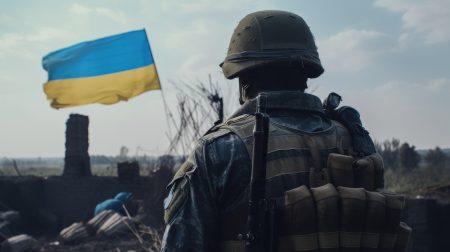
Russia’s invasion of Ukraine in February 2022 laid bare the fragility of a model based on small, professional armed forces. Massive losses in personnel and equipment have forced European capitals to confront a harsh reality: professional reserves alone are insufficient in the event of a continental-scale conflict.
“Experience from Ukraine shows that armies fight battles, but states fight wars,” stresses Brig. Gen. Jarosław Gromadziński, president of the Defensa Institute.
“It turned out that when the war broke out in February, by July and August Ukraine had already exhausted its trained reserves and was forced to train people straight off the streets. The problem is not a lack of equipment, but a gap in manpower reserves,” the expert adds
Nine Countries with Mandatory Service, Others Plan a Return
Between 1990 and 2013, most EU member states abolished conscription, opting instead for forces designed for rapid deployment. Today, compulsory military service remains in place in Austria, Cyprus, Denmark, Estonia, Finland, Greece, Latvia, Lithuania, and Sweden. Croatia plans to reinstate conscription in 2026.
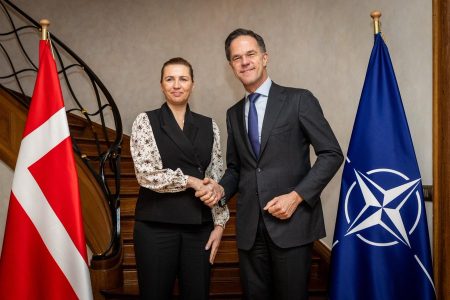
The length of service varies widely—from six months in Austria to 347 days in Finland. In 2025, Denmark extended mandatory service to women, continuing a trend first launched by Norway in 2015.
Frontline states in the Nordic–Baltic region have successfully consolidated or restored “Total Defence” models, using selective conscription systems that enjoy strong public legitimacy.
“Finland can mobilise 280,000 soldiers from reserves numbering 870,000,” says Gromadziński. “That is the largest artillery potential in Western Europe.”
Sweden operates a selective draft: out of 100,000 eighteen-year-olds, around 8,000 are called up, turning service into a prestigious distinction. In the Baltic states, the return of mandatory service has strengthened deterrence on NATO’s eastern flank. In Latvia, support for conscription rose from 45% to 61% in 2023 following Russia’s invasion of Ukraine, with approval among 18–24-year-olds reaching 50%.
Germany Tests the “Osnabrück Model”
After suspending conscription in 2011, the Bundeswehr shrank to around 180,000 soldiers—well below the target of 260,000 active troops and 200,000 reservists needed to meet NATO commitments by 2035. To rebuild reserves, the Bundestag passed the “Military Service Modernisation Act” in 2025, championed by Defence Minister Boris Pistorius and dubbed the “Osnabrück model,” after his hometown.
From 2026, all eighteen-year-old men will complete a digital questionnaire assessing physical fitness, education, and willingness to serve. While the system is formally voluntary, it is supported by incentives, including a monthly salary of €2,600 and benefits such as a state-funded driving licence. Crucially, the law includes a “trigger mechanism”: if voluntary recruitment fails to reach 20,000 new recruits per year, the government may activate limited compulsory service among eligible candidates.
The legislation sparked significant political friction and public resistance. In early December, more than 55,000 students in 80 cities took part in a “school strike against conscription.” Organisers, backed by student unions and left-wing groups, chanted slogans such as “We won’t die in your war!”
Chancellor Friedrich Merz defended the decision, stressing that the government prioritises voluntarism, while not ruling out further steps towards compulsory service for young men. As he noted, “If Germany does not increase the number of soldiers quickly enough, the government will have to begin discussions during this legislative term about mandatory elements of military service, at least for young men.”
A Deep Generational and Geographic Divide
Youth opposition reflects a broader European challenge. Data from Gallup and the European Council on Foreign Relations reveal a stark East–West divide in the “will to fight.” In the Baltic states, Finland, and Poland, willingness to defend the country militarily exceeds 60–80%, while in Germany, Italy, and Spain it stands at just 30–40%.
Support for conscription is lowest among those aged 18–29—the very group that would be called up. In Germany, only 32% of this cohort supports conscription, compared with 67% among those over 60, creating a clear “intergenerational imbalance.”
In Poland, a 2023 survey found that 44% of respondents opposed restoring conscription, with the highest resistance among people under 30.
In southern and western Europe, despite recruitment challenges, Spain, Italy, and Portugal remain resistant to reinstating conscription. Spain’s strategy focuses on meeting NATO spending targets through equipment modernisation rather than expanding troop numbers. In Italy, right-wing initiatives for mandatory civil–military service have stalled due to lack of political support and resistance from the armed forces, which favour smaller, professional units and see conscription as a risk to operational quality.
Poland: Voluntarism Instead of Conscription
Poland has launched the EU’s most ambitious military expansion, aiming to increase its armed forces to 300,000 by 2035—250,000 active personnel and 50,000 in territorial defence. Instead of restoring conscription, Warsaw relies on “Voluntary Basic Military Service.”
The programme offers 12 months of paid service at professional-soldier pay levels, serving as a pathway to the regular army or active reserves. Recruitment targets for 2024–2025 were sharply raised, and the Ministry of Defence plans to attract 39,000 volunteers in 2026 alone. The Polish model rests on a high threat perception, patriotism, and economic incentives.
Adam Świerkowski, editor at Defence24, argues that voluntarism is only a transitional phase.
“This solution seems better for now, given our current socio-cultural conditions, than restoring conscription,” he says. “It should be continued to build the groundwork for a possible return to mandatory service in the future.”
He stresses the importance of systemic preparation.
“The solutions and procedures developed today with volunteers could reduce the problems that would arise if universal service were reintroduced. Without them, we could see a return of the pathologies and problems of decades past—something nobody needs,” he warns.
General Gromadziński disagrees.
“We talk about a 300,000-strong army, but in my view it doesn’t matter how many there are in peacetime—we must have a million-strong army in wartime. A million. And that’s no joke,” he insists.
“If Finland, with 5.5 million citizens, can field 900,000 soldiers within 180 days, then Poland should be able to do the same.”
The Rise of Voluntary Programmes in Western Europe
France, Belgium, and the Netherlands are developing voluntary military programmes to strengthen reserves without mandatory conscription.
The Netherlands has been expanding a voluntary service programme since 2023 to support its professional forces. France plans to launch a ten-month service for 18–19-year-olds in summer 2026, starting with 3,000 places and gradually increasing to 10,000 per year by 2030, and ultimately to 50,000 by 2036, investing €2 billion in the project. Paris aims to build a reserve force of 105,000 by 2035.
Belgium sent 149,000 letters to 17-year-olds offering a monthly salary of €2,000 for participants in a programme set to begin in September 2026, with the goal of expanding reserves from 6,000 to 20,000.
A New Approach: Service to the State Instead of Conscription
The general proposes a comprehensive reserve system.
“We need reserves not only for the military, but also for the police, fire services, healthcare, and civil defence. The entire state apparatus must be viewed holistically,” he argues.
Young people aged 18–23 would undergo basic training lasting two to three months, then be assigned to reserve units, taking part in annual exercises that leverage skills acquired in civilian life.
“The point is that an IT specialist shouldn’t end up on the front line as an ordinary infantryman in a trench. Civilian skills must be properly utilised,” Gromadziński stresses.
The Economic Cost of Conscription and the Risk of Old Pathologies
Research by Germany’s Ifo Institute shows that drafting an entire age cohort could reduce German GDP by around 1.6%—roughly €70 billion per year—mainly by delaying young people’s entry into the labour market. Even partial conscription of 25% of a cohort would result in losses of €17 billion. Raising pay in voluntary systems, while costly for public finances, does not reduce productivity and is far more efficient.
Świerkowski warns of even broader consequences.
“Reinstating mandatory service would remove tens of thousands of potential workers from the labour market each year, slowing economic activity, weakening scientific and public institutions, and reducing budget revenues across many sectors,” he explains.
He also highlights the social risks of poorly prepared conscription.
“If a country is not ready for such a crucial decision, the long-term reputational and social damage could be enormous. Just recall what conscription looked like in Poland—everyone tried to avoid it,” he notes.
“In today’s hyper-connected societies, every instance of abuse or dysfunction would be instantly amplified. That’s why this is an enormous challenge that requires preparation.”
Voluntary programmes, he argues, have clear advantages.
“In voluntary recruitment schemes, economic losses are much smaller due to scale. They can even have positive local effects in regions with high unemployment. The military becomes an economic engine—soldiers spend their pay somewhere,” Świerkowski observes.
General Gromadziński, however, advocates non-financial incentives inspired by Nordic models.
“Look at Switzerland or Finland—they have the best reserve training systems, and the incentives are very different,” he says. “You can get a truck-driving licence for free, crane-operator training, cybersecurity courses—skills the state pays for, on the condition that the person serves in a relevant reserve unit.”
From “Cannon Fodder” to the “Digital Native”
The war in Ukraine has reshaped the concept of the conscript. Nordic countries now selectively recruit individuals with cognitive skills suited to drone and cyber operations.
“High digital competence is essential if modern military equipment is to be rapidly deployed and effectively operated,” Świerkowski notes.
The Hybrid Future of European Defence
EU institutions are supporting defence capabilities through the 2030 Defence Readiness White Paper, focusing on modern technologies without introducing mass conscription. Military service is evolving towards a Hybrid Defence Architecture—the Cold War model of mass conscription is unlikely to return in Western Europe.
Croatia’s planned reintroduction of conscription in 2026 will be a key test. European states face a dilemma: rapidly build reserves through compulsory service, risking economic and social costs, or expand them gradually through voluntary programmes, hoping time will help avert the worst conflict scenarios.
Military service in the EU is moving towards a hybrid model. A full return to Cold War–era mass conscription in Western Europe is unlikely. However, sustained geopolitical tensions could normalise some form of military service in 10–12 European countries by 2030—though high implementation costs and public resistance remain formidable obstacles.