


The European Parliament’s vote on the citizens’ initiative “My Voice, My Choice” has once again exposed how deeply divided the European Union remains on worldview issues — and how abortion has become one of the key battlegrounds of this ideological clash.
The resolution was adopted by 358 votes in favor, with 202 against and 79 abstentions. It does not directly change the law in any member state. Its significance is primarily political and symbolic — particularly for countries such as Poland.
More than 1.12 million EU citizens signed the My Voice, My Choice initiative, whose authors call for improved access to safe and legal abortion across the EU.
A central element of the resolution is an appeal to the European Commission to consider creating a voluntary solidarity mechanism financed from EU funds. The idea would be to allow women from countries with restrictive abortion laws to access procedures in other EU member states.
Abir Al-Sahlan, an MEP from Sweden’s Centre Party (Renew Europe) and rapporteur of the initiative, welcomed the outcome of the vote.
“A great victory for all women in Europe. The EU has finally shown that sexual and reproductive health care is a fundamental human right,” said al-Sahlani in a press release from the EU Parliament.
Importantly, abortion — as EU institutions have repeatedly stressed — remains within the competence of individual member states. The resolution does not impose legislative changes or strip countries of sovereignty in this area. Still, it clearly marks another step toward the Europeanization of a debate that until now has largely played out at the national level.
“This is a historic moment for women’s rights. It happened despite a growing wave of conservative and right-wing voices across Europe. It is the result of the enormous effort of the international “My Voice, My Choice” team, which managed to coordinate actions across so many countries,” says Anna Tomaszewska from Akcja Demokracja in an interview with EURACTIV.pl. Activists from the organization collected signatures for the initiative across Poland.
Poland: expectations vs. reality
Poland has one of the most restrictive abortion laws in the European Union. Following the Constitutional Tribunal’s ruling in October 2020, which declared abortion in cases of severe fetal defects unconstitutional, the procedure was effectively banned under domestic law.
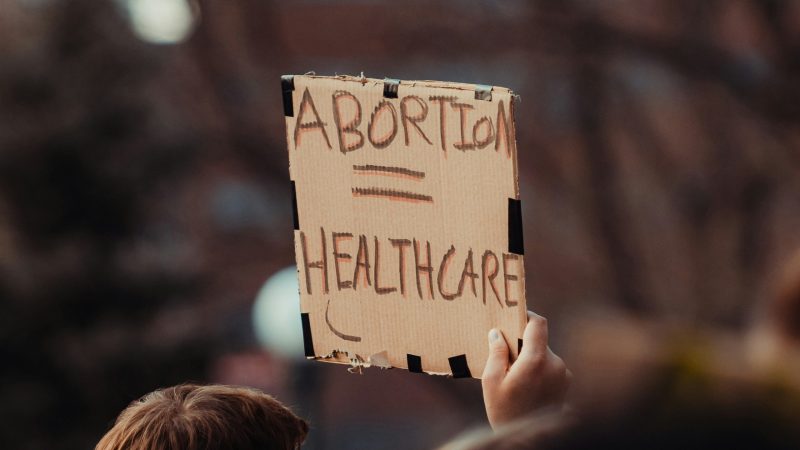
The ruling sparked massive social protests — hundreds of thousands of people took to the streets as part of the Women’s Strike, opposing restrictions on reproductive rights and the influence of the Church on state legislation.
After the change of government in 2023 and Donald Tusk’s return to power, expectations of reform were high, especially among liberal voters. While the governing coalition signaled a willingness to ease restrictions, no meaningful changes have followed. Bills liberalizing abortion law were rejected in parliament, and internal divisions within the coalition stalled legislative progress.
Notably, before the 2023 election, Donald Tusk had promised changes to abortion law and a departure from the most restrictive solutions. After taking office, however, the tone shifted. In an October statement this year, Tusk openly said that he “doesn’t like it when someone says abortion is a woman’s right,” a remark widely interpreted as a retreat from more progressive rhetoric and criticized by women’s rights groups.
“We joined My Voice, My Choice because we saw a complete retreat by the governing coalition from its campaign promises. Civic Platform no longer even pretends that it wants to reform abortion law in line with modern medical knowledge and genuine support for women’s autonomy,” Tomaszewska explains.
Against this backdrop, the European Parliament vote takes on added significance. For many Polish activists and liberal politicians, the resolution represents a form of civic and European support where the national parliament and government have failed to act decisively.
In the vote, the vast majority of MEPs from (KO, European People’s Party), Michał Kobosko from Poland 2050 (Renew Europe), and all representatives of the Left (The Left group in the EP) supported the resolution. However, Hanna Gronkiewicz-Waltz of Civic Coaltion (KO, EPP) and Adam Jarubas from the Polish People’s Party (PSL), also a member of the EPP, voted against it, while Krzysztof Hetman (PSL, EPP) abstained. MEPs from Law and Justice (PiS, European Conservatives and Reformists) as well as both Confederation delegations (Identity and Democracy / Non-Inscrits) voted against the resolution.
The solidarity mechanism dispute
Supporters argue that the initiative is about women’s health and safety, stressing that the proposed solidarity mechanism would be voluntary. Countries opposed to such a solution would not be formally forced to participate.
“We believe this solidarity could enable an international support mechanism for women in countries where abortion is restricted or difficult to access. This is particularly important for women in weaker socio-economic situations and those living in smaller towns,” Tomaszewska emphasizes.
Critics counter that financing such measures from the EU budget would indirectly involve all taxpayers, including those from countries whose societies and constitutions emphasize the protection of unborn life.
“This solution not only lacks a legal basis in the treaties but also violates the principle of respecting national health policy choices, as set out in Article 168(7) of the TFEU,” argues Julia Książek, an analyst at the conservative Ordo Iuris International Center.
“In practice, it would be an attempt to circumvent member states’ laws and a form of enforced — even if formally voluntary — financial co-responsibility for actions that conflict with their legal order,” she adds.
What is clear is that the resolution opens a new phase of political pressure on the European Commission, which is required to present an official response to the initiative by March 2026. Even if no concrete legislative steps follow, the Parliament’s backing strengthens the position of groups pushing for further liberalization across the EU.
For Poland, it is a clear signal that the abortion debate is no longer purely a domestic political issue — it is becoming part of a broader struggle over the future shape of European integration.