


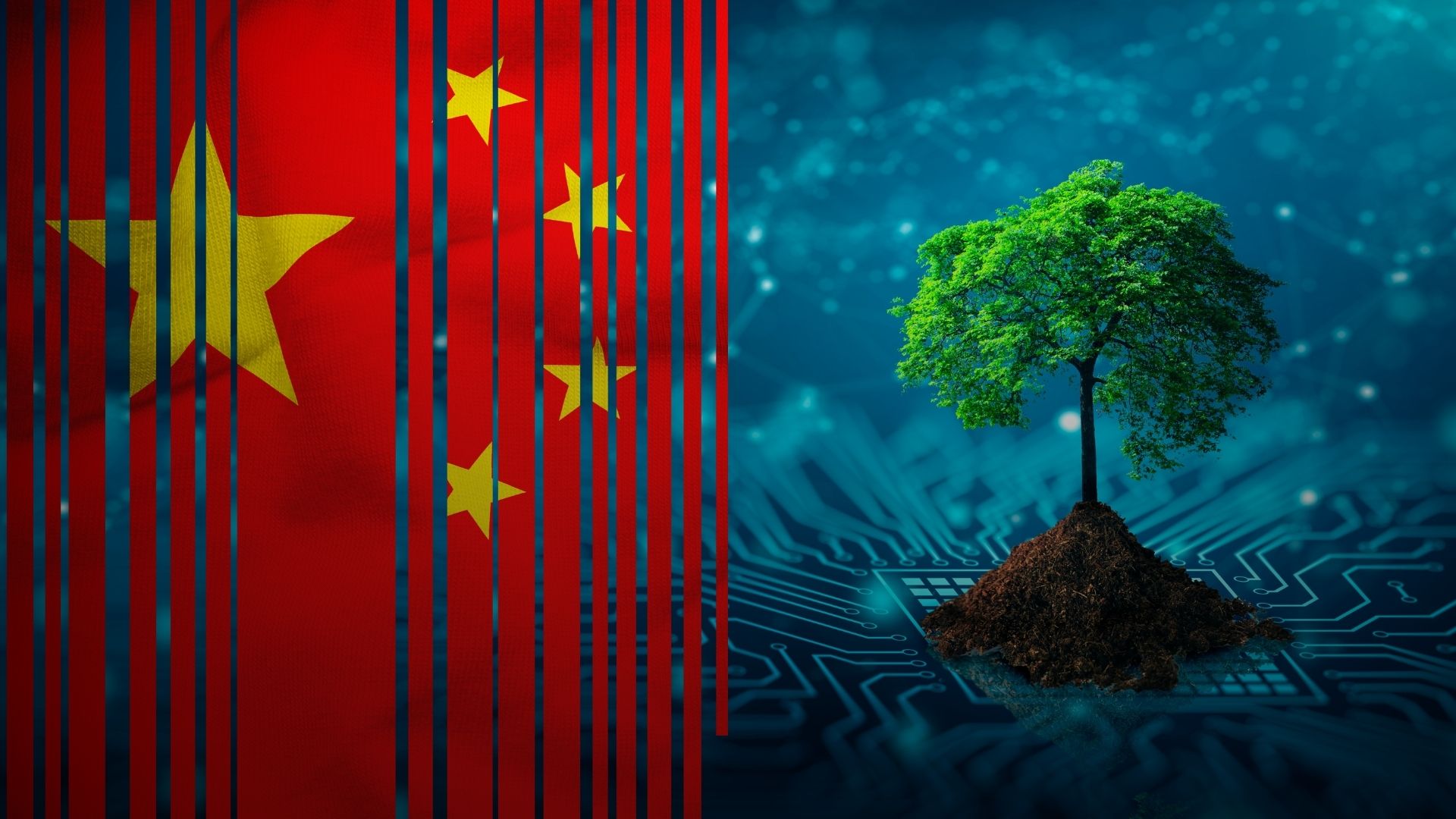
Europe is increasingly using China as a convenient excuse for its own doubts about the energy transition. Yet behind the simplistic slogan of “Chinese emissions” lies a far more complex interplay of interests, technologies, and long-term strategy.
In public debates across many EU member states, a recurring argument claims that European climate policy is internally inconsistent and economically irrational because China—the world’s largest emitter of carbon dioxide—allegedly does little to curb emissions. In this narrative, EU cooperation with China on green technologies is portrayed as contradicting the core assumptions of the European Green Deal.
This line of thinking is particularly common in Central and Eastern Europe, where energy systems have long relied on coal and the costs of transition are politically sensitive. In Poland, the Czech Republic, or Slovakia, references to “Chinese emissions” are often used to argue that EU efforts are pointless if the global problem is supposedly concentrated outside Europe.
The real picture of China’s emissions
It is true that China is currently the world’s largest CO₂ emitter, responsible for roughly one-third of global emissions. This reflects the sheer scale of its economy, its role as the world’s manufacturing hub, and an energy mix still dominated by coal. But taken without context, these facts lead to misleading conclusions.
In recent months, China’s emissions have fallen by around 1 percent from their historical peak—an early signal that the country may be reaching a sustained emissions peak in sectors such as construction, steel, and cement. Crucially, this decline is not the result of economic crisis or administrative shutdowns, as in the past, but of structural changes in the energy system. If the current pace of renewable expansion continues, it could mean a lasting slowdown in emissions growth rather than a temporary correction.
Officially, China has pledged to peak carbon emissions before 2030 and achieve carbon neutrality by 2060, focusing on reducing emissions intensity relative to economic growth. These goals, however, are subordinate to overriding priorities: energy security and industrial development. As a result, both the pace and the path of implementation remain flexible and closely aligned with state interests.
The biggest emitter—and the biggest investor
The claim that China is “doing nothing” for the climate ignores a central fact: China is the world’s largest investor in renewable energy. The scale of its investments in solar and wind power is unprecedented in the history of energy transitions. In recent years, China has added more new solar and wind capacity to its grid than any other country possesses in total.
Experts increasingly note that at this pace, China will soon have far more wind and solar capacity than the entire European Union combined. This is why analysts argue that Europe continues to underestimate the scale of China’s acceleration in the energy transition.
Yet climate concerns alone do not drive this transformation. For Beijing, energy security and the creation of a new pillar of economic growth are paramount. Green energy, transport electrification, and energy storage technologies are seen as areas in which China can become a global technological and industrial leader.
The logic of China’s energy security
One of the most common arguments against the credibility of China’s transition is that the country continues to build new coal-fired power plants. Without understanding China’s energy security logic, this is easily interpreted as hypocrisy. In reality, coal plays the role of a strategic backstop.
China has limited domestic oil and gas resources, and imports of both have surged with economic growth. Coal—mined largely at home—remains the only fuel that guarantees full control over energy supplies. New coal capacity increasingly serves as reserve capacity, stabilising the system when renewables cannot meet demand.
From a European perspective, this model is controversial. From Beijing’s point of view, it enables a rapid expansion of renewables without risking supply disruptions—an issue of fundamental importance for an economy of China’s scale.
Technological ambitions and the long game
China’s energy transition is not limited to mass-producing solar panels or batteries. Beijing is also investing heavily in potentially breakthrough technologies such as nuclear fusion reactors, often dubbed an “artificial sun.” While commercial fusion remains distant, the scale and consistency of these investments show that China is thinking about energy security in decades, not years.
For Chinese leaders, cutting greenhouse gas emissions is not an end in itself, but part of a broader strategy to modernise the economy, improve air quality in smog-choked cities, and build global technological power. In this sense, Chinese climate policy differs from Europe’s not in direction, but in motivation.
China is not Europe’s “green ally”
A key mistake in European debates is the assumption that China’s energy transition stems from a sudden embrace of green ideals or shared values with the EU. Nothing could be further from the truth. Beijing’s climate policy is driven not by moral or normative considerations, but by cold strategic calculation in the face of environmental degradation, structural energy constraints, and the need for new growth engines.
China is among the most polluted countries in the world, with smog posing a serious social and health challenge that threatens domestic stability. The energy transition is therefore less a choice than a necessity.
At the same time, Beijing has clearly recognised that green energy is not a cost, but one of the most profitable sectors of the 21st century. As the “factory of the world,” China built its advantage on mass production—and has now applied the same logic to renewables, energy storage, electric vehicles, and grid technologies. The result is clear: China already dominates global clean-tech markets, controlling much of the supply chain from raw materials to finished products. This is not a by-product of climate policy, but a deliberate industrial strategy backed by massive public and private investment.
China’s emissions remain enormous, much of them linked to producing goods for export. The EU is one of China’s key trading partners, meaning a significant share of “Chinese” emissions is effectively embedded in Europe’s consumption model. The paradox is that Beijing both contributes to climate degradation and simultaneously builds dominance in the industries meant to address it. Green technologies have become a strategic business for China, comparable to electronics or steel in earlier decades.
EU–China cooperation on green energy therefore does not reflect shared values or a classic “green partnership.” It represents a clash of two logics: Europe’s, based on regulation and emissions reduction, and China’s, focused on market dominance, energy security, and control over key technologies. China’s massive green investments do not make it Europe’s climate ally—they make it a global power that understood early on that the future of energy is the future of economic power.
A myth that weakens Europe’s debate
The narrative that China is doing nothing for green energy is a distortion that weakens Europe’s public debate. China remains the largest emitter of greenhouse gases, but it is also the country transforming its energy system fastest and investing most heavily in future technologies.
Using China as an argument against EU climate policy is not serious analysis—it is a political shortcut that distracts from Europe’s real strategic challenges. Ironically, abandoning the energy transition would mean Europe permanently losing influence over the future shape of the economy, technology, and energy security.
If the EU wants to remain a player rather than merely a market for others’ solutions, it must compete actively in green technologies, invest in innovation and domestic capacity, and treat the transition as a matter of strategic sovereignty—not just ideology. Otherwise, Europe risks not only losing the race for future technologies, but also becoming dependent on imported energy and solutions that are now reshaping the global balance of power.