


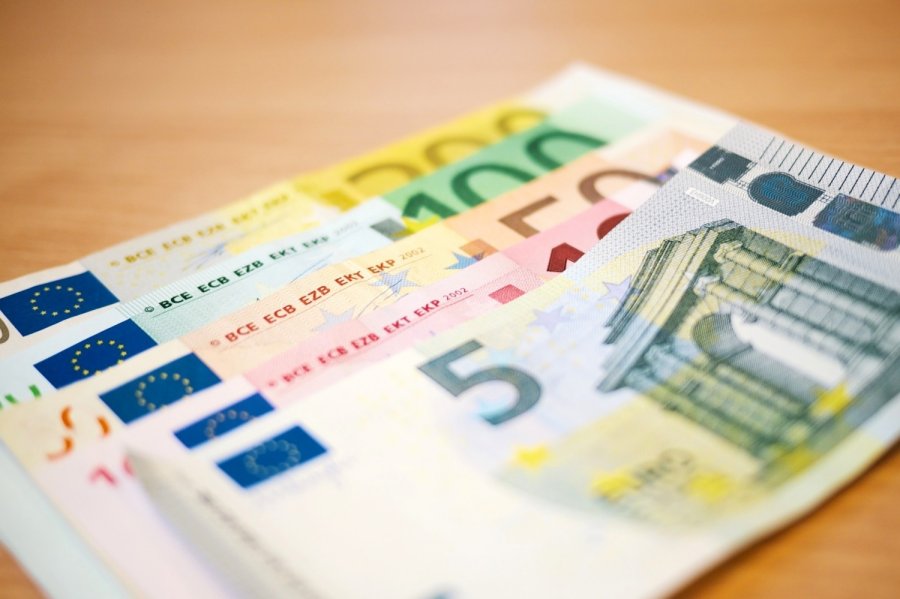
On the 1st of January this year, Bulgaria became the 21st country of the eurozone, officially introducing the euro into circulation. From the very beginning, this step has been viewed very controversially within Bulgarian society, with critics voicing concerns about its impact on the economy and possible inflation.
Throughout January, Bulgarian residents can still pay in levs, but from the 1st of February this will no longer be possible. The lev has been Bulgaria’s currency since 1881.
Policy-makers in Brussels and Sofia have expressed hope that this step will boost the economy of the European Union’s poorest member state and strengthen its pro-Western orientation. Last year, European Commission (EC) President Ursula von der Leyen predicted that, “thanks to the euro”, Bulgaria’s economy would “become stronger”, promoting trade, more investment, and more “quality jobs and real incomes”.
Meanwhile, European Union (EU) Commissioner for the Economy Valdis Dombrovskis commented during a November visit to Sofia that this step was particularly important during Russia’s war against Ukraine, amid rising geopolitical tensions and global economic uncertainty.
“Most European countries, including Bulgaria, are too small to shape today’s world individually. They gain the necessary influence only by fully integrating into the European Union’s major political and economic structures,” Dombrovskis noted.
However, despite the praise from EU officials, Bulgarians themselves were not convinced of the benefits promised after joining the eurozone. Public opinion polls indicated that Bulgaria’s 6.5 million inhabitants were divided roughly in half over the currency change. The newspaper The Guardian cited a recent Ministry of Finance survey which showed that, although 51% of residents supported the transition to the euro, 45% remained opposed. The main concerns were about “abusive price-setting during the currency changeover”.
The BBC describes how, primarily in the eyes of urban, young and entrepreneurial Bulgarians, the transition to the euro is seen as an optimistic and potentially profitable step, following membership of NATO and the EU, then joining the Schengen area, and finally accession to the eurozone. By contrast, among the more conservative parts of society – likely representing the older generation and mainly rural regions – the replacement of the Bulgarian lev with the euro has provoked fear and resentment.
Petar Ganev, an expert at the Sofia-based think tank Institute for Market Economics, told The Guardian that the split in opinion over the euro was one symptom of broader political tensions in the country. He stressed: “This is not surprising. The country is divided over almost everything imaginable. After political power instability, we ended up in a very hostile political environment.”
In comments to Euronews at the end of December, Ganev said: “The bigger effect is the long-term effect, which essentially increases trust in the currency, its purchasing power, foreign investors’ confidence, the confidence of people who buy Bulgarian debt, as well as people who invest in various sectors in the country.”
He predicted that the introduction of the euro could also affect Bulgaria’s credit rating: “Credit agencies downgrade our credit rating because of the currency. They say that if you have external debt in another currency, then we reduce your credit rating. So for 28 years we have had a downgraded credit rating, and now this will finally disappear.”
At the same time, he forecast that joining the eurozone would only slightly increase inflation: “This [the currency change] is not the main factor. The main factor is consumption, which is driven by the inflationary budget and record-high lending, especially for new homes.”
The BBC analysed that lessons from other countries’ experiences suggest two possible scenarios. One is the successful “Baltic model”, followed by Estonia, Lithuania and Latvia, which combined the euro with reforms to improve governance, encourage investment and combat corruption. The other is the “Italian model”, where years of stagnation followed accession to the eurozone.
So what is the situation really like?
Vladimir Ivanov, head of Bulgaria’s Euro Introduction Coordination Centre, told National Radio (BNR) on 11 January that concerns about the consequences of adopting the euro had not materialised: “Things are going quite well. I would confidently say that we are doing better than Croatia.”
According to him, many residents have now seen that the dramatic fears did not come true and that neither the state nor the economy experienced the collapse some had predicted. Despite rumours about the future of the eurozone or a return to the lev, the market has stabilised, largely thanks to the trading system and the role of large retailers, which have absorbed some of the initial pressure.
At the same time, he noted that there have been no problems with food prices since the introduction of the euro: “Prices are determined by market factors… The consumer basket is the same as at this time last year – 51 euros. These are data showing that we have a stable market and that a small amount of inflation is inevitable; it simply cannot be avoided.”
It is unlikely that Bulgaria’s accession to the eurozone will change the country’s economic trajectory, bne Intellinews quotes analysts from Capital Economics as saying. “We forecast that GDP per capita will rise from around 40% of the eurozone average to about 55% by 2035,” the analysts note, while stressing that Bulgaria will nevertheless remain the poorest country in the eurozone.
The Capital Economics report emphasises that the euro’s introduction will have only a limited impact, because Bulgaria had already taken the necessary steps to mitigate risks before the currency change, including giving up an independent monetary policy.
However, political instability could negatively affect Bulgaria’s economy. As previously reported, at the beginning of December, after weeks of widespread protests against corruption, Prime Minister Rosen Zhelyazkov’s government resigned less than a year after taking office. The four-year political crisis, marked by seven parliamentary elections and widespread corruption, has undermined trust in government and fuelled a polarised political climate. Nevertheless, despite the government’s resignation, the transition to the euro continues.
Ganev explained to Euronews that as a result of these developments it has not been possible to establish “long-term political stability or a government”: “This creates problems with the budget, because we cannot pass a budget on time. In four of the last five years, we have entered the year without a budget.”
Capital Economics analysts stress that, despite the relatively positive outlook, risks remain: “Downside risks include political instability that could lead to excessive fiscal deficits and weaker governance, as well as a failure to make use of available EU funding.”
On Friday, Bulgarian President Rumen Radev announced that snap elections would be held after the leading parties refused to take a mandate to form a new government.
At the same time, The Guardian highlights another factor behind the strong resistance to the euro transition. Investigative reports have revealed that a network of Russia-linked social media campaigns has sought to undermine support for the euro by spreading disinformation.
“It is provocation, acts of sabotage, violations of European airspace, interference in political processes in the EU, including in other countries, and the spread of disinformation,” Dombrovskis commented, stressing that it is “no secret” that Russia is waging a hybrid war against Europe.