


A new global order is taking shape, one where the United States is withdrawing from its role as the primary guarantor of global security. Washington’s newly revealed strategy places Europe lower on its list of priorities as it shifts its focus.
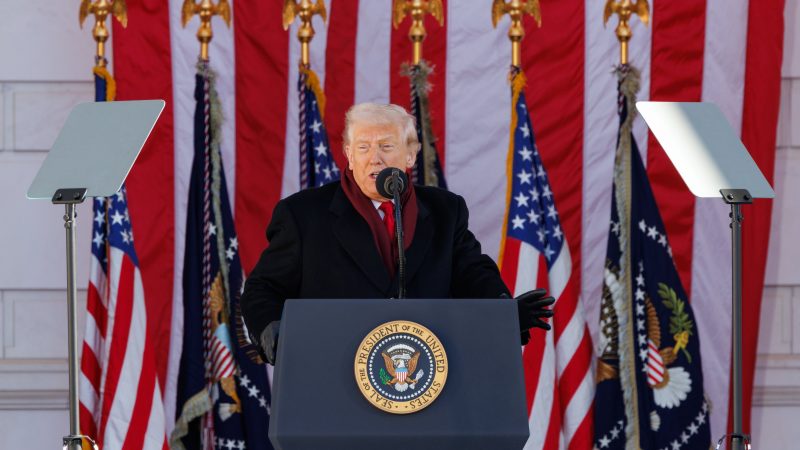
In an unprecedented move, the administration of Donald Trump released a new National Security Strategy (NSS) in early December, fundamentally redefining the United States’ role on the global stage.
This document goes beyond a mere policy update; it is a declaration of a paradigm shift. America is deliberately scaling back its commitment outside of key regions and abandoning its traditional role as global hegemon, guardian of the liberal order, and guarantor of European security, in favor of an emphasis on great-power competition.
“Trump and Trumpism are not the cause but the result of changes taking place in the United States. America is simply different today,” observed Dr Jakub Olchowski, Director of the European Competence Centre at the The Maria CurieSkłodowska University (UMCS) in Lublin and analyst at the Institute of Central Europe during a conference “European security architecture in times of geopolitical uncertainty: the French-Polish perspectives” at the University of Warsaw’s Centre for Europe. The new strategy serves as political confirmation of this “new America.”
From hegemon to one of many players
The United States is moving away from its decades-long foreign policy of global dominance. The new strategy acknowledges an asymmetrically multipolar world where the U.S. remains a central power – alongside China – but no longer takes on the role of “world’s policeman.” The main focus is to prevent any state from emerging that could threaten U.S. interests, prioritizing this objective over the export of liberal norms and values.
The document prioritises domestic security, viewing key threats expansively beyond military attacks to include influence operations, espionage, disinformation, cultural subversion, predatory trade practices, and drug trafficking. This strategy represents a modernised and more profound interpretation of America First, emphasising internal resilience and competitive advantages instead of maintaining a global order based on rules established by Washington.
Asia at the centre, Europe on the sidelines
The shift in the hierarchy of regions crucial to US security is the most significant change. The Western Hemisphere is now the primary concern, followed by the Indo-Pacific, pushing Europe down to the third priority. Europe, once a cornerstone of US strategy, is now viewed as an important cultural and economic ally, but its status as a key strategic theatre has diminished.
The Trump administration’s main focus is reshaping economic ties with China, which it accuses of intellectual-property theft, market-distorting subsidies, control over critical raw materials, and fentanyl exports.
Consequently, the Indo-Pacific – rather than Europe – is presented as the central area for future U.S. political, economic, and security involvement.
The document later portrays Europe primarily as weak, seeing it as a continent struggling with demographic, civilizational, and economic decline. This is attributed to the growing influence of EU institutions, migration pressures, falling birth rates, and the weakening of national identities.
Furthermore, Washington views the European Union as undermining the sovereignty of its member states and impeding American businesses through overly strict regulation.
For Central and Eastern Europe, particularly exposed to Russian pressure, this diagnosis is alarming. A US retreat from NATO and the EU would directly threaten regional security.
Central and Eastern Europe (CEE) faces an alarming diagnosis, highlighting its particular vulnerability to Russian influence. The security of this region would be directly threatened by a potential US withdrawal from NATO and the EU.
“In the Baltic states, the risk of Russian aggression is a daily reality,” security expert Prof Zdzisław Śliwa of the Institute of International Studies at the University of Wrocław, former the Dean of the Baltic Defense College in Tartu, Estonia, told the conference at the University of Warsaw.
Washington’s sustained interest in the region is evident, yet it increasingly favors fostering bilateral relationships over collaborative engagement via EU institutions.
Russia: Europe’s problem, not America’s
Regarding Russia, the strategy’s most contentious point is the shift in framing. Unlike previous administrations, the US no longer views Moscow as a direct strategic threat to itself, but rather as one that is existential primarily to European nations.
The NSS proposes achieving “strategic balance” in Europe primarily through diplomatic efforts, rather than military deployment. This approach is viewed favorably by the Kremlin, as it aligns with Russia’s perspective on European security.
The document’s interpretation of the war in Ukraine is particularly concerning. It suggests that European governments are responsible for prolonging the conflict, in contrast to their societies, which are supposedly increasingly yearning for peace. This perspective sharply diverges from the significantly more critical assessments provided by European military leadership.
“Putin likes to move borders. The question is not ‘if’, but ‘when’,” said French Vice-Admiral Hervé Bléjean, former Chairman of the European Union Military Staff (EUMS), during the conference in Warsaw.
He stressed that the war will not end through appeals to international law. “There is no way to end it on our terms other than entering the war—and that is absolutely not our objective,” he added.
NATO without the US?
The strategy outlines significant shifts, including the cessation of NATO enlargement and a phased decrease in the US military commitment to European defence. Crucially, the document introduces a new model of burden-sharing, citing the Hague Commitment: European allies are urged to allocate up to 5 per cent of their GDP to defence, signifying Europe’s acceptance of primary responsibility for its own security.
“NATO cannot be replaced—but it will be dead the day the United States leaves it,” Bléjean warned.
“Perhaps we need to start talking about saying goodbye to America. But today, we still need it. The best path forward is building a strong European pillar within NATO,” added Prof Samuel Faure of UCLouvain Saint-Louis Bruxelles.
Central and Eastern Europe at a historic crossroads
The new US strategy signals to countries in the region that the American security umbrella is no longer a given. Russia’s continued aggressive and unpredictable behavior means it closely monitors any perceived signs of Western weakness.
“Putin is Putin. He is wrong about many things, but on one point he is right: the West is lazy and decaying,” remarked Olchowski.
In recognising the increasing potential for Washington to adopt a more distant perspective, Europe must prioritise developing its own capabilities, resilience, and strategic agency. This is a necessary measure, not one that is opposed to the United States.
“The war should be ended on European, not American, terms,” Śliwa stressed.
A world without the American Atlas
More than a mere technical policy, the new U.S. National Security Strategy serves as a manifesto proclaiming the close of an era. This was a period defined by the United States maintaining the global order, safeguarding Europe’s security, and championing the liberal system. Now, America positions itself as just one entity in a multipolar world, driven primarily by its own national interests.
This is a defining moment for Europe. It needs to develop genuine strength before it faces a reality where the United States is increasingly disengaged. This is a crucial test that requires sustained and decisive action, not mere declarations.