


The European Commission’s new Network Package, revealed on Wednesday, December 10, marks a significant shift in Europe’s energy policy, aiming to revolutionize the continent’s energy infrastructure. This initiative is designed to accelerate the green transition, enhance resilience, and ultimately lower electricity prices across the EU.
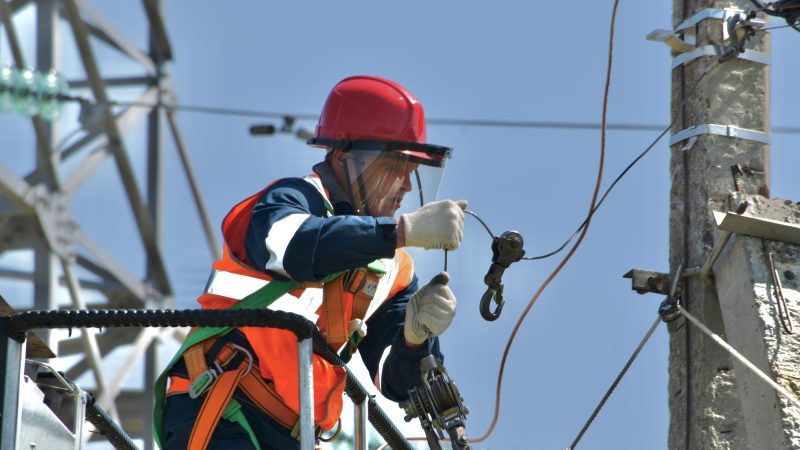
Central to the plan is a strong focus on centralized planning and massive investment in power grids, with a projected €584 billion needed by 2030, potentially rising to €2.29 trillion by 2050. Despite the ambitious goals and potential for transformation—especially for countries like Poland struggling with outdated infrastructure and connection backlogs for renewables—the package is already facing political and environmental controversies.
Brussels Takes the Helm
The core of the new energy package involves a significant change: the European Commission will take over the responsibility for continental grid development planning. Starting in 2027, Brussels will have the authority to decide on crucial investments under the Ten-Year Network Development Plan (TYNDP), thereby replacing the current, often fragmented, system of national planning strategies.
As Tom Lewis, an energy policy expert at Climate Action Network Europe, explained to EURACTIV.pl, this marks a shift “toward a more coordinated, top-down approach,” moving away from “allowing member states to continue with fragmented and often inefficient planning.” This EU-level planning will have the power to intervene; for instance, if a country plans to build new gas plants, the EU could counter, saying: “you don’t need them—just draw on electricity transmitted from Bulgaria, Germany, or Austria.”
The fragility of Europe’s electricity grids is a very real concern. A stark illustration of this came in April 2025, when a widespread blackout in the Iberian region left 60 million people without power. Compounding this challenge, fourteen member states still have not achieved the 2030 goal of 15% interconnection capacity.
Cheaper, Faster, More United
Modernizing the electricity grid offers significant economic benefits. The European Commission estimates that a €5 billion investment in power networks could generate €8 billion in savings across the system. Despite this potential, European electricity costs remain two to three times higher than those in the United States.
Energy policy expert Tom Lewis highlights the dual importance of this issue: “It’s about affordable energy crossing borders and about solidarity between nations.” He cites Spain as an example, noting that surplus wind and solar energy there often goes unused.
“If that surplus can be transmitted to Poland, prices fall—because otherwise the energy would simply be wasted. In such cases, we’re talking about electricity that is almost free,” he adds.
However, some politicians may struggle to accept the idea of mutual dependence. According to Lewis, the benefits of “cheaper power and a more stable, resilient system must outweigh fears of lost autonomy.” He suggests that countries believing they can be completely self-sufficient are not making the best decisions, even if this notion is politically appealing to some leaders.
Environmental and Social Fault Lines
The proposal to exempt grid projects from environmental impact assessments, a move intended to reduce lengthy bureaucratic delays, is generating significant controversy. Under the proposed plan, small-scale renewable and storage projects would be completely relieved of permitting requirements.
However, as Tom Lewis cautions, “Acceleration must go hand in hand with environmental protection; only then can climate, nature, and energy security goals reinforce one another.”
NGOs warn that taking regulatory shortcuts could undermine biodiversity protections and provoke public backlash, ultimately causing greater delays than intended.
To enhance public participation in the energy transition, the package introduces new rules. Renewable energy projects exceeding 10 MW must now share profits with local communities, and independent advisors will involve residents from the earliest development stages.
Lewis comments, “These new rules on community involvement and benefit-sharing mean that citizens will directly gain from renewables, which will increase support and accelerate the transition.”
Geopolitics and Security
The proposed energy package, known as the “Energy Highways” initiative, is designed to enhance Europe’s energy security by improving grid connections and reducing dependence on energy imports. The European Commission aims to strengthen links between national grids, with a particular focus on isolated regions such as the Baltics, Cyprus, and the Iberian Peninsula. Successful execution of this plan could eventually enable the European Union to achieve 100% renewable electricity by 2040.
Lewis views the package as “a long-awaited step that will accelerate Europe’s transformation toward a resilient, renewable energy infrastructure.” However, progress is vulnerable to potential risks, including permitting delays and funding shortfalls if member states are slow to act.