


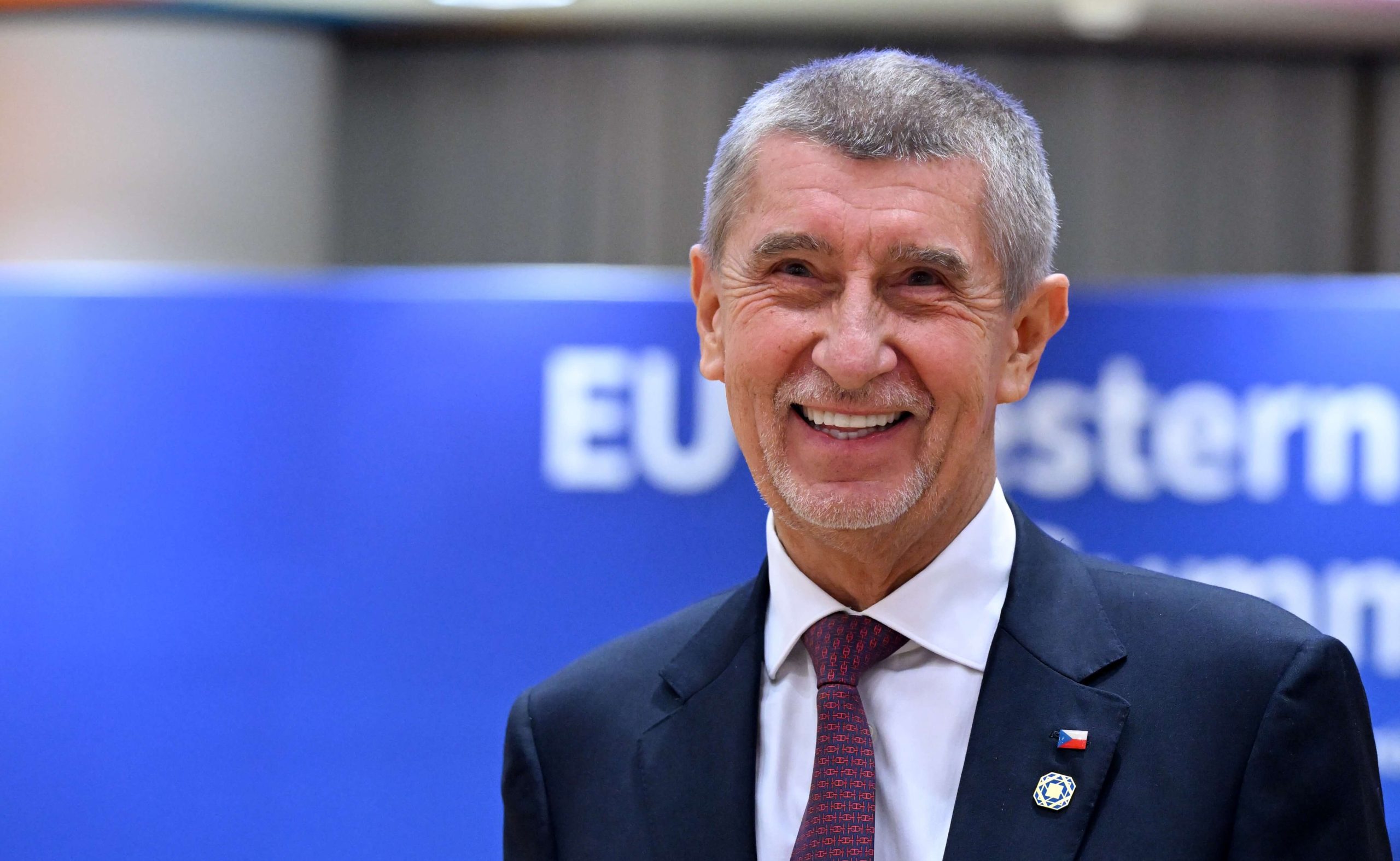
Czechia found itself in an ambivalent position at the December’s European Council summit. Czech Prime Minister Andrej Babiš (ANO) publicly voiced support for continued financial assistance to Ukraine, while at the same time negotiating an exemption that shields the country from liability for a new €90 billion EU loan.
The funds are to be raised by the European Commission on financial markets and then provided to Kyiv in the form of loans.
Andrej Babiš justified his stance as a necessary step to protect Czech public finances. Politically, however, the move has raised concerns that Czechia may be drifting away from the European mainstream on Ukraine policy. The opposition has warned of a loss of trust among allies and a growing alignment with Hungary and Slovakia. The prime minister, by contrast, insists that the Czech position is different.
“We do not have the same position as Slovakia and Hungary. We support Ukraine. We supported the conclusions, with the exception that we do not want to guarantee the loans,” Andrej Babiš said after the summit.
The European Council conclusions on Ukraine, which endorse assistance through a joint €90 billion loan, were signed by 25 member states. Hungary and Slovakia refused to support any form of aid.
Czechia did join the final compromise, but only on the condition that it would not bear financial responsibility for the joint borrowing.
“There were no reactions. I insisted on it,” Babiš said when asked how he secured the exemption.
How the compromise emerged
Negotiations had initially been heading in a different direction. The European Commission, backed by Germany, pushed for financing Ukraine through revenues generated by frozen Russian assets. This so-called reparations loan was meant to provide Ukraine with stable funding while sending a strong political signal to Moscow.
The plan, however, ran into fierce opposition from Belgium. Prime Minister Bart De Wever warned that the proposal was legally and financially unsustainable and would expose his country to Russian retaliation—particularly because of the role of Euroclear, the Belgian-based depository holding most frozen Russian assets. He demanded unlimited guarantees from other member states to fully shield Belgium from any risk, a condition that many governments found unacceptable.
“Leaders essentially did not know what commitments they would ultimately be signing up to,” one EU diplomat described the atmosphere of the talks.
After several hours of negotiations, it became clear that there was no consensus on the reparations loan. “It was like a sinking ship, like the Titanic,” De Wever said after the summit.
According to Babiš, uncertainty dominated the discussions over how the reparations mechanism would function and what concrete risks individual states would assume.
“Most leaders did not understand the plan or how to handle it. In the end, it was decided that a loan would be provided,” the Czech prime minister said. Discussion of a reparations-based mechanism remains possible, however. The European Council conclusions indicate that leaders could return to the issue at a future meeting.
“The Czech Republic will not guarantee either option,” Babiš added.
The Czech PM also questioned the logic of committing to long-term financing for Ukraine at a time when, in his view, there is a realistic prospect of a peace settlement. “I am surprised that we are committing money two years in advance when we know that a peace agreement is approaching,” he said.
Ukrainian President Volodymyr Zelenskyy, who briefly attended the summit, offered a different perspective. In his view, secured financing based on revenues from frozen Russian assets would strengthen Ukraine’s negotiating position in any future peace talks.
“These funds are obviously necessary so that neither Russia nor anyone else in the world can use Russian assets as leverage against us,” Zelenskyy said.
Enhanced cooperation as an exceptional step
Decisions on the EU’s common budget normally require unanimity, which in this case would have been blocked by Hungary, the most vocal long-term opponent of financial aid to Ukraine. The exemption for Czechia, Hungary and Slovakia therefore relies on the mechanism of enhanced cooperation, which allows a group of member states to move forward without the participation of all. The summit conclusions state that under this arrangement, the loan will have no impact on the financial obligations of the three countries.
As European law professor Alberto Alemanno noted, enhanced cooperation has been used around ten times in the past, for example in divorce law, the European patent system or the financial transaction tax – but never before for joint borrowing backed by the EU budget. This raises a number of unresolved questions, including who would bear the risk if Ukraine were unable to repay the loan, and whether it is legally possible to fully exclude three member states from liability.
The European Commission will now have to propose the concrete design of the mechanism. At the same time, Alemanno argues, a broader debate is opening on whether this approach sets a precedent for circumventing unanimity in fundamental budgetary decisions.