


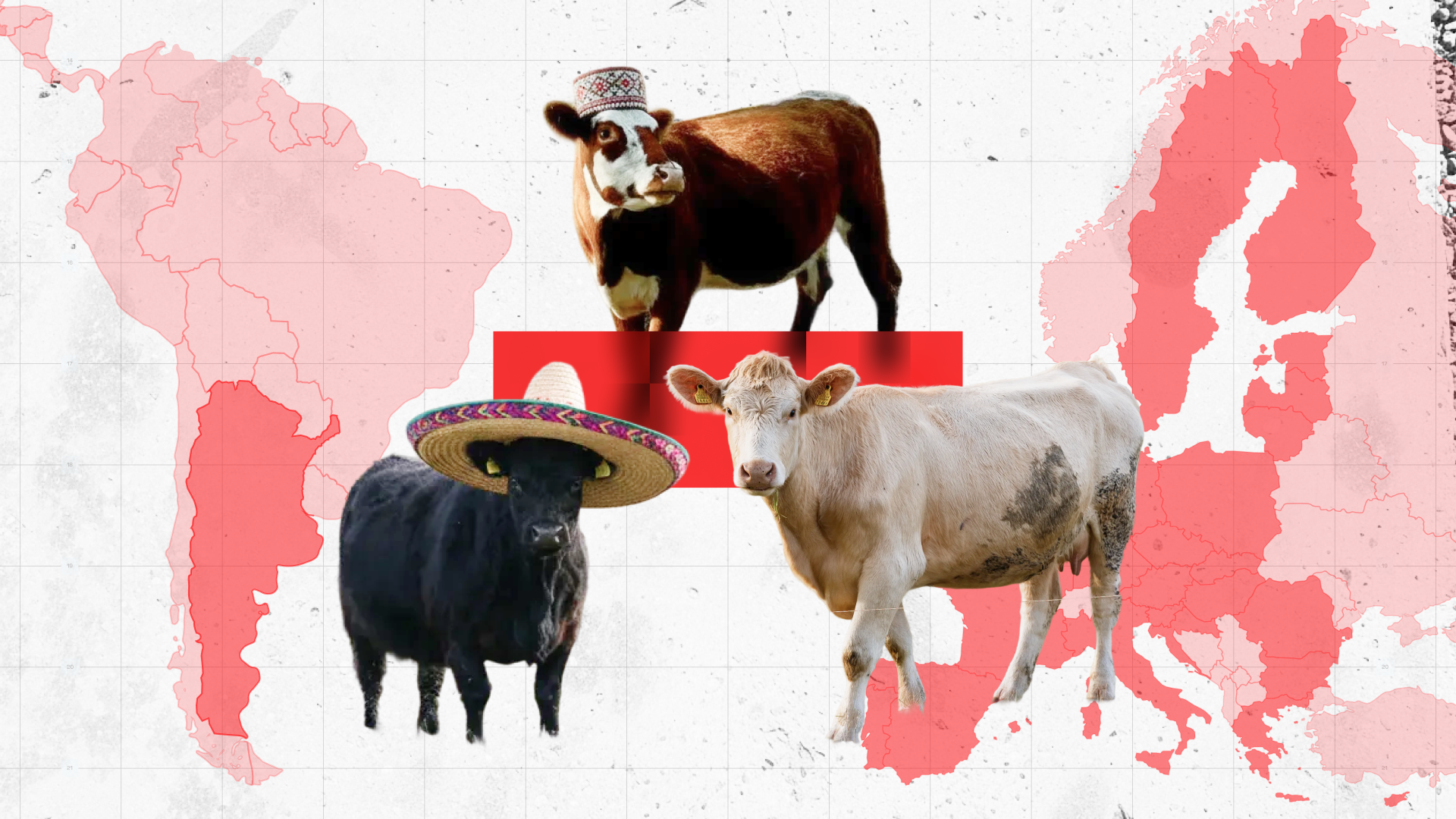
Farmers are worried that Europe will soon be flooded with cheap (and poorly farmed) beef steaks from Brazil and Argentina. Politicians are rubbing their hands in delight, claiming that we are about to create the world’s largest free trade zone by combining Europe and South America.
Meanwhile, economists are shrugging – Central and Eastern Europe trades very little with Mercosur, and this is unlikely to change in the coming years. That is why the debates and protests over the new free trade agreement are shaking Western European capitals, while in our region, very few people even think about it.
Farmers lose, but win
Mercosur is a free trade bloc established in 1991, comprising most South American countries either as full or associate members. Negotiations between Mercosur and the European Union (EU) on a free trade agreement began as early as 1999, and in 2019 a “principle agreement” was reached. However, as often happens in EU negotiations, it took several more years to fully draft the text of the agreement. EU countries only reached a qualified majority earlier this January, allowing the agreement to be signed.
If implemented, the agreement would create the world’s largest free trade zone with more than 700 million people, gradually eliminating over 90% of the various tariffs currently applied between the blocs. Economists point out that the EU would benefit from easier exports of various technologies, particularly in the automotive sector, while South American countries would gain wider access to the EU market for food and agricultural products.
This has also been one of the obstacles to concluding the agreement – European farmers, especially beef producers, are concerned that cheap South American products could push them out of the market. As a result, both at the end of 2025 and earlier this year, when the ratification of the agreement reached its final stage, farmers in Europe staged protests.
According to Politico, formally the agreement reached by EU countries with Mercosur in January represents a defeat for European farmers. In practice, however, to achieve this deal, the European Commission has had to promise farmers an additional 45 billion euros in subsidies in the next EU multiannual budget.
Latvia is concerned, but not protesting
Maira Dzelzkalēja-Burmistre, Vice-Chair of Latvia’s largest farmers’ organisation, the Zemnieku Saeima, told Delfi that in both Latvia and the EU countries where active farmer protests are taking place, the main concern is beef imports from Argentina, Brazil and other Mercosur countries. Therefore, the discussion continued with Raimonds Jakovickis, livestock expert from Zemnieku Saeima and Chairman of the Beef Cattle Breeders’ Association.
Jakovickis explains that the agreement lacks transparency. The EU supposedly has the highest standards in the world for animal farming, including welfare, ecology, traceability, and health. “Consumers who choose locally farmed beef in Latvia can trace the animal’s birth farm and its entire subsequent journey. Beef from, for example, Argentina can only be traced to the country of origin, but within that country traceability is simply not possible. Animals live in very large areas, sometimes the size of one of our municipalities, so traceability only begins shortly before the animal reaches the slaughterhouse,” he said.
Similarly, the EU bans the use of hormones and strictly regulates antibiotics, while the Mercosur agreement would allow products from countries without such standards. “We have double standards. We impose high bureaucratic burdens and increase production costs for our producers, while the other countries have no such requirements,” Jakovickis complains.
In Latvia, beef cattle are mostly raised for export to Western markets. We mainly consume pork and poultry – which is why farmer protests against the Mercosur agreement, such as those in Western Europe, are not happening in the Baltics and the Nordic countries. However, when farmer protests were held in Brussels in December, including against this agreement, Latvian representatives participated, he noted. Whether farmers in our region could organise similar protests or urge parliaments to reject the EU–Mercosur agreement, Jakovickis currently had no definitive answer.
Canada was rejected, will South America be accepted?
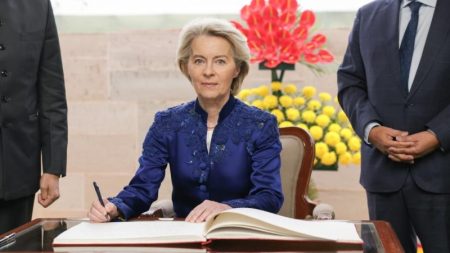
On the 17th of January, European Commission President Ursula von der Leyen signed the new agreement between the two blocs at a ceremonial event in Paraguay. The fight is far from over – the final text must be translated into all official languages of the participating countries and submitted for approval to the European Parliament and national parliaments, the Council of the EU notes.
This process could take time, Politico warns. The most fervent opponents admit that the European Parliament does not have enough votes to reject the agreement outright, but there is a possibility of challenging it in the EU Court of Justice, arguing that the agreement is too broad and violates EU treaties.
It is worth recalling that it has already been demonstrated how complex it is to ratify such international agreements within the EU – even after signing, implementation can take years. For example, in 2016 the Walloon Parliament in Belgium almost blocked the Comprehensive Economic and Trade Agreement (CETA) between the EU and Canada. Ten EU countries have still not ratified CETA, so the agreement is not formally in force and is applied only “provisionally.” Tariff reductions on goods between Canada and Europe are in effect, but the planned mechanism for resolving international investment disputes has yet to be implemented.
In January, France, Austria, Hungary, Poland and Ireland opposed the Mercosur agreement in the EU Council, while Belgium abstained. Could there be parallels between CETA and the Mercosur agreement? Kārlis Purgailis, Chief Economist at Citadele Bank, says it is quite possible. Latvia and Eastern Europe currently trade very little with Mercosur. In theory, the agreement should increase trade, but in practice, if any EU country sabotages its implementation, the effect will be smaller than expected.
Seeing steaks, buying weapons
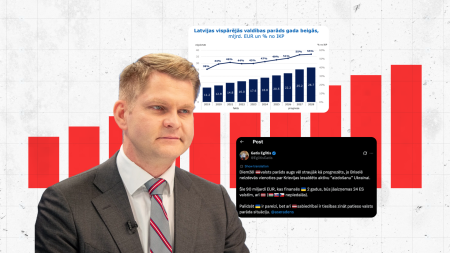
Purgailis notes that trade between Latvia and Mercosur countries is currently negligible in both imports and exports. In the first 11 months of last year, imports from Mercosur to Latvia accounted for less than 0.2% of total trade, with exports slightly higher. Looking at Central and Eastern Europe, countries in our region import slightly more from Mercosur than they export, but even here the share is only 0.6% and 0.3% of total foreign trade.
The most “visible” Mercosur products in our shops are indeed various Argentinian and Brazilian steaks, but Purgailis points out that this is only a small fraction of Latvia’s already tiny trade with these countries. For example, in 2025 we imported food products worth 5 million euros from Argentina, most of which were food industry residues and animal feed. From Brazil, Latvia mostly imported weapons and ammunition, as well as exotic wood. “Some European countries import more agricultural products, but not our region. We mostly consume locally produced food, and our main import partners are Lithuania and Estonia, not distant South American countries,” he summarises.
According to the economist, the EU–Mercosur agreement, if implemented, will not bring rapid changes, as companies will need time to adapt. In the long term, however, it could be positive for the economies of Eastern Europe. At the EU level, the main exports to Mercosur are automotive and transport components. Latvian and Baltic companies supply components for these products. Increased production would benefit us, he explained.
No protests in South America?
How do people in South America view this agreement? Jānis Bērziņš, leading researcher in national defence and an economics PhD who studied in Brazil, told Delfi that the positions of the worried and the pleased are reversed – farmers see the agreement as a celebration, while the local automotive and manufacturing industries are concerned.
The similarity is that farmers, both in Europe and Brazil, are politically influential. Local automotive industries have been supported for years by import tariffs, but the results have not been the best – car plants in South America are owned by the same European and US companies, and locally manufactured cars are more expensive and of lower quality than imports. Consequently, this industry currently lacks lobbying power to oppose the agreement, Bērziņš explains.
Regarding the EU impact, Bērziņš refers to calculations predicting that the deal could create around 450,000 new jobs by 2040 and increase EU GDP by 0.05%, with the caveat that these figures apply to the EU as a whole. Latvia and Eastern Europe, which currently trade very little with Mercosur, will not experience major changes. Producers whose products are attractive to the South American market, such as IT company Mikrotik, already export there without a free trade agreement.
Bērziņš also suggested that European farmers’ protests might delay the ratification of the agreement, but their arguments about low-quality South American beef do not hold up. “From my personal experience – I like beef, steaks – honestly, you cannot compete. Our beef is quite poor. For example, beef fillet compared to Latin American fillet is tough. With or without the agreement, the price difference is not that big – if I can buy beef from Brazil for 35 euros per kilogram or from Lithuania for 28 euros, of course I will pay less,” he says.
Overall, it cannot be claimed that the agreement will be a catastrophe for European, especially Latvian and Northeastern European farmers, he added. Yes, in sectors such as beef and sugar production, local producers could face stronger competition, but, for example, grain farmers have no reason to worry, as corn and soy are not grown at our latitude anyway.