


Romania’s new National Defense Strategy for the 2025–2030 introduces “solidary independence” as its key concept, born out of a sober analysis of current realities and a medium-term vision for the country.
“Solidary independence” is the result of several objective processes:
- the strong growth of the national economy, including its increasing capacity to project investments beyond Romania’s borders;
- the accumulation of significant experience by the diplomatic corps and by institutions in the defense, public order and national security system, including in conflict zones;
- the qualitative rise in Romanians’ expectations and demands, as citizens increasingly call on public institutions and critical systems to deliver performances compatible with a modern, developed state.
Despite hesitations and setbacks, Romania today stands on the threshold of full national and state maturity, potentially ready to address its vulnerabilities and make optimal use of the natural and historical opportunities at its disposal.
“Solidary independence”
Romania aims to follow Poland’s path, an ambition made possible in part by the advantages it has gained – and continues to gain – from membership in NATO and the European Union. This membership has created the conditions for Romania’s transition to this new strategic concept: solidary independence.
“By loyally demonstrating solidarity with its allies and partners, Romania has strengthened its status and position within NATO and the EU. Conversely, by consistently pursuing its own interests and contributing its unique expertise to allied and European policies, Romania has given full value to its solidarity with its allies and partners”, states the document.
The two parts of the concept of solidary independence will “reinforce one another, illustrating that true independence cannot exist without loyalty, and that the value of loyalty is strengthened by independence”.
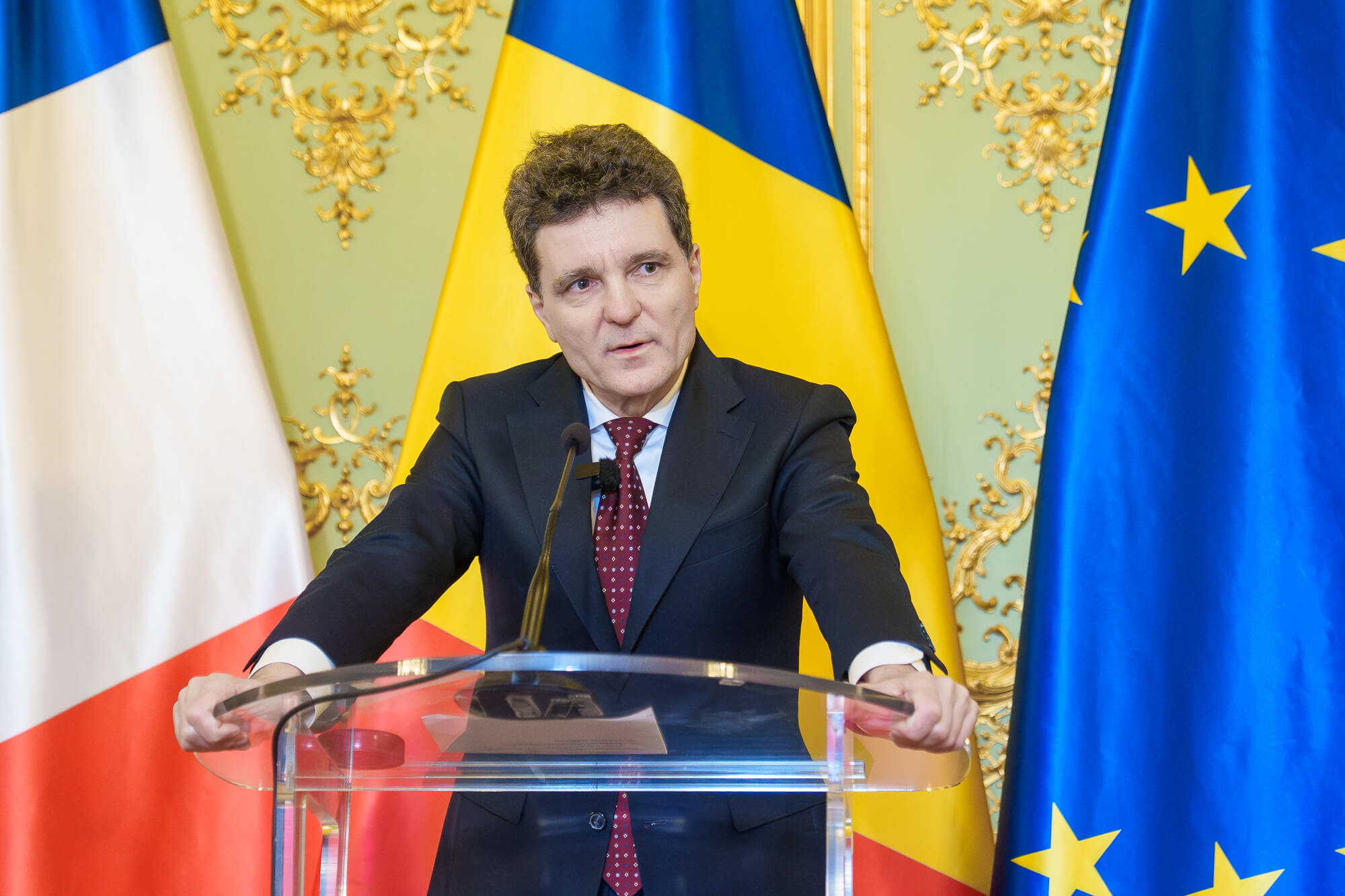
Presenting the 2025–2030 Strategy in front of the Romanian Parliament, President Nicușor Dan explained the concept:
“Independence, in the sense that the actions of the state administration must reflect the way people here see the world – translated internationally into the affirmation of this identity and of the interests corresponding to it. And, on the other hand, solidarity, meaning our respect for all partners and for all the commitments we have undertaken in an increasingly complex world”.
The concept has generated mixed reactions.
Remus Ștefureac, director of the INSCOP research institute, hopes that “solidary independence” will translate, both for elites and especially for the population, into “a new national narrative focused on the need for a deep strengthening of Romania’s defense,” primarily through its own means.
The Association for the Defense of Human Rights in Romania – the Helsinki Committee (APADOR-CH) considers the term “too abstract,” arguing that “it is unclear what was intended to be conveyed” through it.
Most likely, the strategy’s implementation plans will provide further clarification of the concept.

The Eastern Flank and the Black Sea
Beyond the controversy, the National Defense Strategy signals a new stage in Romania’s historical development.
After consolidating its role as a NATO and EU member and with accession to the OECD on the horizon, Romania aims to expand its influence in its immediate region of interest and to project its national interests more assertively on the international stage.
According to the document, Romania has the arguments to position itself in the medium term as the leading power in Southeast Europe and the second-largest power east of Germany, after Poland, acting as “a predictable security provider” and a pillar of stability for the Black Sea region and the Western Balkans.
Highlighting Russia’s military posture, its aggression against Ukraine, and especially the significant militarization of the Crimean Peninsula since 2014, the strategy warns that these developments endanger Black Sea security. It calls for transforming the Black Sea region into an area of “stability, connectivity and prosperity,” where security challenges are managed through dialogue and cooperation.
Regarding NATO’s Eastern Flank, two objectives stand out: strengthening Romania’s country profile on the Eastern Flank and reinforcing NATO’s deterrence and defense posture in the Black Sea region, through national efforts and an enhanced allied military presence.
It remains to be seen how relations with the United States will evolve, as the document largely ignores recent statements by the Washington administration and the new Trump security strategy, which signal a shift in U.S.–Europe relations.
Romania’s strategy nevertheless states that Bucharest remains “a decisive promoter” of the Strategic Partnership with the United States and of an increasingly close, deep and diversified transatlantic relationship.