


Transparency International Ukraine and Ukrainian MP Vitalii Bezgin reject the narrative of rampant corruption in Ukraine promoted by pro-Russian propaganda. They urge Europeans to disregard this framing, noting that international evidence and Kyiv’s measurable progress in fighting corruption over the past decade tell a starkly different story.
“Ukraine is the most corrupt country in the world, and it applies to all levels of governance.” The Slovak prime minister has used this sentence, in various versions, many times over the past few years (for example here, here, or here).
He returned to it again in December, when the EU was approving a critically important loan for Kyiv, without which the country would have run out of funds for basic state functioning by April. The prime minister shared a clip from his December’s interview for Rádio Slovensko on Facebook with the caption: “Ukraine is a black hole where billions of euros disappear, along with rational economic thinking and the EU’s sustainable future.”
The narrative emphasising the “overflowing corruption” in Ukraine is one of the key themes of Russian propaganda. Its aim is to damage Ukraine’s international image, undermine trust among its Western partners, and ultimately discourage them from providing further military or financial assistance.
Slovakia’s eastern neighbour, now in its fourth year of defending itself against unprovoked Russian aggression, continues to struggle with corruption. Ukraine’s political scene was recently shaken by the major Midas corruption scandal in the energy sector, which cost two ministers and President Volodymyr Zelenskyy’s “right-hand”, Andriy Yermak, their positions. Soon after, allegations emerged that some MPs had accepted bribes in exchange for votes.
As the very investigation of these cases and many other indicators show – from expert assessments and evaluations by anti-corruption organisations to opinions of the European Commission – Ukraine’s fight against corruption is making a significant progress.
“International evidence does not support portraying Ukraine as the most corrupt country,” Transparency International Ukraine told EURACTIV Slovakia. “The relevant question for European partners is not whether corruption exists – it exists in every country – but whether Ukraine has credible mechanisms to detect corruption, investigate it, and correct the course. And it does.”
In its approach to corruption, Ukraine is also proceeding in many ways in the exact opposite direction to Slovakia.
While Slovakia dismantled key anti-corruption bodies, Ukraine created them
In the past years of Robert Fico’s government, several anti-corruption institutions in Slovakia have either been abolished (the Office of the Special Prosecutor and the National Criminal Agency) or are threatened to be brought under political control (the Whistleblower Protection Office). Ukraine, in contrast, has established their counterparts.
It was precisely these equivalents of former Slovak institutions – the National Anti-Corruption Bureau of Ukraine (NABU) and the Specialized Anti-Corruption Prosecutor’s Office (SAPO) – that launched investigations into cases reaching the highest levels of Ukrainian politics at the end of 2025.
“This is a strong signal that independent institutions in Ukraine are functioning and that corruption is not tolerated even among the highest state officials,” the EU ambassador to Kyiv, Katarína Mathernová, responded at the time.
The establishment of these bodies, as well as further measures in the areas of the rule of law and anti-corruption, was closely coordinated with the EU. As a candidate country and a state at war requiring financial assistance from its partners, Ukraine must carefully follow not only Brussels’ recommendations, but also those of institutions such as the International Monetary Fund.
Figures also contradict claims that Ukraine is the most corrupt in the world. The Corruption Perceptions Index 2024, compiled annually by Transparency International, places Ukraine 105th out of 180 countries. The country perceived as the most corrupt is therefore South Sudan (180th).
Ukraine has been improving in this ranking almost continuously for 12 years. By comparison, in 2014 it stood at 144th place. Two years ago, Transparency even described Ukraine as one of the index’s biggest climbers.
By contrast, the country that has been steadily – and significantly – worsening in the rankings is Russia. It currently occupies 154th place out of 180. In that sense, it is Russia that can be described as one of the world’s 30 most corrupt states.
338 convictions of “big fish” in five years
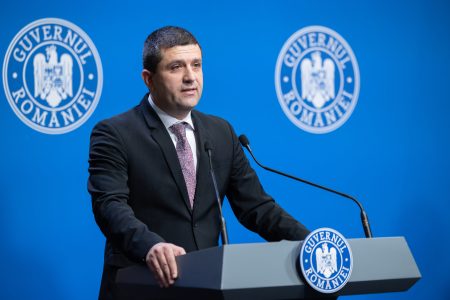
“Before the Revolution of Dignity (also known as the Euromaidan in 2014, ed. note), Ukraine have huge corruption problems in all spheres of life,” says Ukrainian MP Vitalii Bezgin from President Volodymyr Zelenskyy’s Servant of the People party, who is directly involved in implementing anti-corruption reforms, particularly in transparency, decentralisation and public administration.
“But systemic reform of institutions and the construction of an anti-corruption infrastructure are leading to evolution and progress. As for now, we have one of the most transparent public procurement systems in the world,” the MP told EURACTIV Slovakia.
Transparency International Ukraine concurs with this assessment, recalling that since 2014 Ukraine has shifted from being labelled a “corrupt state” to a “country actively fighting corruption”.
From the ground up, it has built an entire anti-corruption ecosystem, made up of the aforementioned institutions and other bodies that are “supported by a legal framework and strong civil society oversight”.
“This system is now delivering results. Over the past five years, courts have issued more than 338 verdicts against high-level officials, and investigations increasingly target influential figures, including ministers, MPs and senior judges,” Transparency International Ukraine says.
According to the organisation, widespread digitalisation has also played a significant role in preventing corruption, helping to decrease drastically the level of petty corruption in everyday situations. “The Prozorro platform, developed by TI Ukraine, has ensured a level of transparency and accountability in public procurement few countries can boast of.”
The war has sharply increased Ukrainians’ resistance to corruption
The organisation also points out that the ongoing war has significantly reduced public tolerance for corruption. Ukrainians increasingly see it not as an abstract problem, but as a “direct threat to defence capacity, human lives, and national survival”.
Before the war, only 40% of Ukrainians said they were willing to report corruption; by the second year of the war, this figure had risen to 84%, according to Oleksandr Novikov, former head of Ukraine’s National Agency on Corruption Prevention.
According to nationwide poll commissioned by Transparency International Ukraine, only 30% of citizens said they had personally encountered corrupt practices over the past year. Of those, 68% said they would refuse to take part in such behaviour. According to the organisation, this points to “a clear strengthening of social intolerance toward corruption and a growing expectation of integrity”.
That said, the battle is far from over. According to the organisation, the past year has exposed significant risks, particularly in politically sensitive areas.
A curled attempt to curtail anti-corruption bodies
These risks concerned, on the one hand, the already mentioned anti-corruption institutions NABU and SAPO. Last summer, parliament passed a law limiting their independence. Under the new rules, they were to fall under the control of the prosecutor general, who is appointed by the president. Public pressure and criticism from Brussels, however, forced Volodymyr Zelenskyy and the Ukrainian parliament to reverse course.
According to Transparency, this episode “represents a serious warning sign”. At the same time, it highlighted the fact that both NABU and SAPO continued investigations at the highest level despite such strong pressure, which, in its view, points to the resilience of the system.
“The public backlash and the subsequent reversal of the harmful legislative changes also demonstrated the maturity of Ukrainian society and the importance of civic oversight in defending democratic institutions,” the organisation added.
The fact that these very institutions ultimately uncovered the Midas mega-scandal, it says, clearly illustrates why institutional independence is crucial. “When anti-corruption bodies are protected from political control, they are capable of investigating even the most sensitive cases involving powerful actors. Independence is not an abstract value – it is a practical condition for results.”
The European Union, Transparency International and the IMF continue to stress to Ukraine the necessity of pursuing the fight against corruption.
Transparency notes that the current wartime situation inevitably opens the door to a number of risk factors in this struggle – urgency, extraordinary procurement needs, secrecy in defence matters, and a higher concentration of decision-making. All of this, if safeguards are weakened, can increase the risk of corruption.
Pro-Russian politicians’ claims are absurd, Kyiv says
So what would MP Vitalii Bezgin and Transparency International Ukraine say to pro-Russian politicians, including Robert Fico, who accuse Ukraine of massive corruption?
“First of all, Russia’s sympathizers in Europe should understand that they are endangering the future of their countries, their children, their generations,” says Bezgin.
“Ukraine is defending all of Europe from dictator Putin. The narrative about excessive corruption in Ukraine from the lips of sympathizers of Russia, which according to all ratings is in the top of the most corrupt countries in the world, sounds ridiculous.”
The Ukrainian MP highlights Ukrainian civil society as the “backbone” of the resilience of anti-corruption bodies. The very fact that investigations continue even during the war, and that suspects can be officials at any level, shows that “there are no untouchables and that the system has changed,” he adds.
“Therefore, I urge you to disregard such a narrative regarding Ukraine, since our state is a shield for Europe, and our army is the guarantor of quiet evenings in European capitals,” Bezgin concludes.
Transparency International Ukraine echoes this, noting that undermining trust in these efforts through simplistic or politically motivated claims only benefits those “who seek to weaken Ukraine’s democratic development and European integration”.
“While corruption challenges persist – as they do in many states, including EU candidate countries and EU member states – Ukraine has made measurable progress over the past decade. (…) Ukraine’s experience over this period shows why such accusations do not hold,” the anti-corruption organisation concludes.