


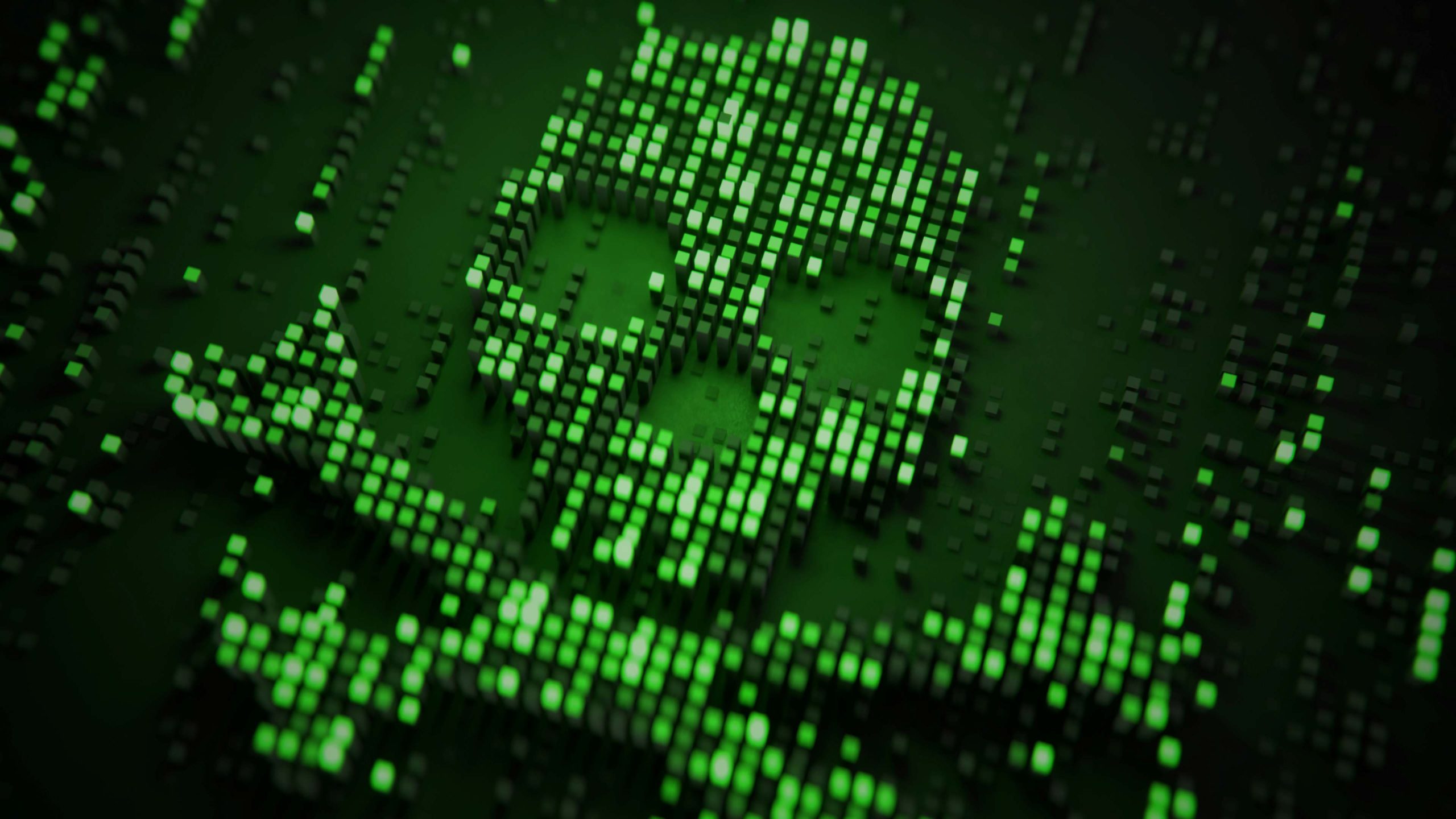
The dead internet conspiracy theory is spreading online, as many feel it explains the current structure of social media.
In 2021, a user named IllumiPirate posted a theory on the Agora Road’s Macintosh Café discussion forum claiming that since 2016, most of the internet has consisted of bots talking to each other. The forum, which focuses on electronic vaporwave music and nostalgic internet art from years gone by, is relatively small, but IllumiPirate’s post has been viewed by over 377,000 visitors. The idea of the Dead Internet has sprouted into a deep conspiracy theory, according to which many politicians and actors, for example, do not exist but are deep fakes.
Few people believe this, but the wild theory nevertheless touches on something essential about the current structure of social media.
“I never took the dead internet theory that seriously but it seems like there are really a lot of LLM-run twitter accounts now,” wrote Sam Altman, CEO of OpenAI technology company, on messaging service X in September 2025.
The update from the developer of the ChatGPT artificial intelligence model seemed revealing to many. Since large language models (LLMs) became widespread in late 2022, the internet has been flooded with content that does not seem human-generated. Artificial intelligence generates and bots seem to distribute most of the content on the internet.
For example, it is easy to find accounts on X that publish identical messages word for word to encourage interaction with them or to advertise something. The messaging service’s algorithm, in turn, accelerates social confrontation between users at an unprecedented rate. The influence of entities such as Russian troll factories on escalating debate is well-known.
Has the Dead Internet conspiracy theory become a reality?
A conspiracy theory with explanatory power
According to the Dead Internet theory, the content spread by bots is controlled by algorithms. The theory suggests that the purpose of the online system is to control people on social media in order to manipulate discussions and opinions. Despite its name, the Dead Internet theory better describes social media than the internet as a whole.
As with many conspiracy theories, some of the observations seem true based on everyday experience, while others cannot be proven. The idea of the Dead Internet offers an explanation for why so much of social media feels inauthentic. Interest in the theory has only increased with the spread of artificial intelligence.
White hat hacker Laura Kankaala has delved deeply into the Dead Internet theory. In her day job, she works as the threat intelligence lead at the consumer cyber security company F-Secure. Kankaala first came across the term while browsing social media and became interested in the subject.
“The term has become a meme in the same way as, for example, the six-seven phrase. The Dead Internet theory describes people’s experience of the internet, especially social media, and how the online content constantly creates an uncanny valley effect,” says Kankaala.
The uncanny valley refers to how, despite their human-like appearance, we shun virtual faces or robots because of the errors or anomalies they contain. Artificial intelligence content and deepfakes can produce the same experience.
Kankaala believes that the Dead Internet theory has a grain of truth despite its conspiratorial nature. She does not believe that the claims made in the original post about entirely generated politicians will come true in the future.
Nevertheless, the Dead Internet theory succeeds in articulating something essential about today’s social media, where artificial intelligence is increasingly present in everything. Artificial intelligence is used to generate memes and funny animal videos, but also information influence campaigns.
“It’s difficult to live on the internet when you have to think about whether all content is generated by artificial intelligence and whether you should care about it,” says Kankaala.
This has been seen recently, for example, in connection with the arrest of Venezuelan President Nicolás Maduro. Fact-checking organisations have identified many of the images and videos related to the event as fake.
“When it goes viral, AI-generated content distorts real-life events. Real content gets buried under junk content,” Kankaala says.
“At the same time, the opinions and thoughts of ordinary citizens are drowned out by a flood of spam comments from politically motivated bots.”
Conflicting desires of users and companies
Laura Kankaala believes that the spread of the term “dead internet” may also have its benefits. It challenges social media users to think about the nature of the internet.
“It’s good for everyone to reflect on the internet and their own relationship with it. It’s no longer the same place it was in previous decades. For example, people don’t share just anything on social media anymore; many are more concerned about their privacy.”
Kankaala believes that the internet will change even more in the coming years. Social media services have changed the internet experience by dividing users more clearly into content producers and consumers. Basic users have been left behind.
On a larger scale, Meta’s Mark Zuckerberg, for example, is striving towards a future where people have more AI friends than real friends. He sees them as a cure for the loneliness epidemic.
“There is a conflict between the wishes of large social media companies and their users. Generative artificial intelligence distances people from each other, but companies want it prominently on their platforms. I hope that in the coming years we will return to more human interaction,” says Kankaala.
Conspiracy theory or conspiracy?
Academic research also finds that the Dead Internet theory raises a real problem. Carlos Diaz Ruiz, an assistant professor at Hanken School of Economics, in Finland, discusses the theory in his book Market-Oriented Disinformation Research, published in 2025.
“This is not entirely a conspiracy theory, but rather an accurate observation of how the internet has changed with the evolution of platforms,” says Diaz Ruiz.
He divides the Dead Internet theory into weak and strong versions. According to the weak version, the internet is still connected to reality, but social media platforms are filled with content created by fake accounts and bots, which directs users to scam advertisements and disinformation. This suits digital companies, as they profit from metrics distorted by bots. The more traffic they generate, the more attention and users they get.
“The weak version of the theory can be classified as a real conspiracy, because AI models are controlled by individual profit-seeking companies that steer them in the direction they want,” says Dias Ruiz. The true nature of social media remains hidden from advertisers who finance the system.
A stronger version of the theory is a more traditional conspiracy theory, in which there is no longer any connection between the internet and reality. The fake reality created by bots on the internet is intended to hide the real state of the world from users, which resembles the post-apocalyptic wasteland depicted in the Matrix films.
Inauthentic content accelerated by AI
According to Diaz Ruiz, the Dead Internet theory nevertheless describes a significant change that began around 2015. At that time, various platforms introduced new revenue models. Content creators on YouTube, X and other platforms earn revenue based on various metrics and not necessarily on the authenticity of their audience.
“The platforms’ monetisation systems encourage people to publish content continuously. It is clear to most of the audience that the platforms are full of inauthentic accounts,” says Dias Ruiz.
“Elon Musk complained about bots on X before buying the platform, but not after. The economic value of X requires advertisers to believe that the interaction is genuine.”
According to Diaz Ruiz, the problem raised by the theory is more acute than ever. Thanks to generative artificial intelligence, producing synthetic content is fast and cheap. This kind of environment reduces trust in all internet content.
Although it is not possible to verify that most social media interaction consists of bots, the Dead Internet theory offers a way to understand current social media.