


Threats toward Greenland are putting NATO to a test like never before. The stakes are not merely the Arctic, but the credibility of the entire European security system – especially on its Eastern flank.
NATO’s measured response to Donald Trump’s increasingly confrontational rhetoric regarding Greenland is no accident. The Alliance finds itself in a situation where its core political and legal mechanisms are failing.
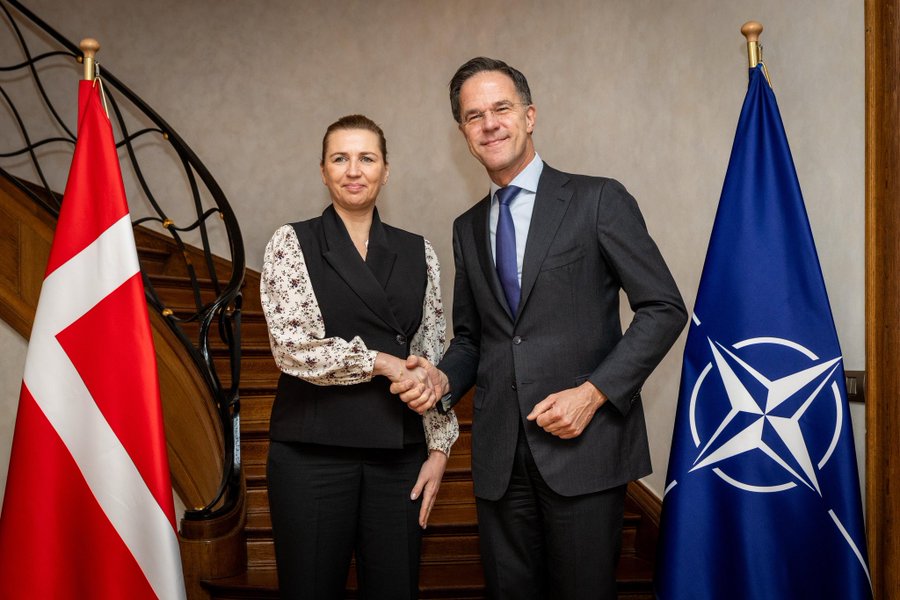
“Whenever a bilateral issue arises between allies, NATO goes silent,” says Fabrice Pothier, former NATO director of planning, now CEO of Rasmussen Global. “It is not a forum for resolving such conflicts, and the Alliance tries not to make things worse by getting involved.”
In practice, this amounts to strategic helplessness. NATO was designed as a deterrent mechanism against external threats. It never envisioned a scenario in which its cornerstone – the United States – could become an aggressor toward another member state.
The Arctic: real threats and a political smoke screen
Officially, NATO today focuses on “maintaining Arctic security.” Secretary General Mark Rutte promises “practical follow-up actions,” though details remain undisclosed. The Alliance is intensifying discussions about Russian and Chinese presence in the region, highlighting new sea routes opening due to climate change and the growing activity of Russian fleets and Chinese research vessels.
According to NATO’s Supreme Allied Commander, Gen. Alex Grynkewich, Russian and Chinese operations include mapping the seabed to identify ways to neutralize NATO’s capabilities “at sea and below its surface.”
The problem is that these real threats are increasingly serving as a political smokescreen. Trump’s rhetoric – suggesting that Greenland must be “taken” to prevent it from falling into Russian or Chinese hands – undermines the very foundation of the Alliance’s narrative: that security is ensured through cooperation, not coercion.
Greenland: crucial, but not stateless
Greenland’s significance for NATO’s air and missile defense system is indisputable. For decades, the island has been part of the American security architecture – under a 1951 agreement, the U.S. gained the right to build bases, airfields, and ports, enjoying broad operational freedom. Americans are present, for example, at the Pituffik (formerly Thule) Space Base.
From a military perspective, Washington already controls almost everything it needs on Greenland. This makes suggestions of force or territorial annexation -allies’ territory – both incomprehensible and destabilizing.
Denmark has announced plans to strengthen its military presence on the island, which allies interpret as a signal to the U.S. that Copenhagen takes Arctic security seriously. Simultaneously, the Danish government has confirmed that its armed forces have the right and obligation to respond almost immediately to any attack on its dependent territories, including Greenland—even without formal orders.
This warning, though cautiously expressed, is clearly directed at Washington.
Article 5 and its limits for the Eastern Flank
A potential U.S. aggression toward Greenland would expose NATO’s biggest structural weakness. Article 5 of the North Atlantic Treaty stipulates that an attack on one member is an attack on all. Yet it does not account for a scenario where the aggressor is the state that forms the core of the Alliance – its military, political, and nuclear backbone.
For NATO’s eastern flank—Poland, the Baltic states, Romania, or Finland—this would be particularly dangerous. Their security depends almost entirely on the credibility of American deterrence guarantees and the Alliance’s cohesion against Russia. Any rupture in that cohesion, especially one so fundamental, would be immediately noticed and exploited by Moscow.
Europe is simultaneously engaged in the war in Ukraine, reinforcing its eastern flank, and rebuilding its own defense capabilities. Diverting political, military, and financial attention of the European Union to an internal NATO conflict—around Denmark and Greenland—would inevitably weaken its ability to respond to real and direct threats from Russia. For Warsaw, Vilnius, Riga, or Tallinn, this would not be an abstract risk but a tangible deterioration of security here and now.
Even graver consequences would follow from NATO’s collapse or effective paralysis. For Kremlin strategists, this would signal that the West has lost its ability to act collectively, turning Article 5 into a political fiction. In such a scenario, military, hybrid, and political pressure on the eastern flank—from the Baltic to the Black Sea—would almost certainly increase.
“The End of NATO”: not rhetoric, but logic
In recent weeks, more and more European politicians have openly discussed the consequences of this scenario. EU Defense Commissioner Andrius Kubilius warned that a forceful takeover of Greenland by the U.S. would mean the end of NATO. Similar positions have been expressed by representatives from France, Germany, the United Kingdom, Italy, Poland, and Spain, emphasizing that Greenland belongs to its own people.
At the same time, an alternative security architecture is emerging. Article 42.7 of the Treaty on European Union obliges member states to provide assistance in the event of a military aggression. In the scenario of a U.S. invasion, this clause—not NATO’s Article 5—could become the real defense mechanism for Denmark.
Amid all this debate, it is easy to forget the island’s residents. Leaders of all major Greenlandic parties issued a joint statement: “We do not want to be Americans, we do not want to be Danes, we want to be Greenlanders.”
This declaration undermines the logic of a geopolitical game in which Greenland appears solely as a strategic asset—a base, shield, or rare-earth resource warehouse. For NATO, which has long professed the defense of sovereignty and the right of peoples to self-determination, ignoring this voice would be yet another blow to its axiological foundations.
An Alliance on the Edge of Its Own Contradictions
Donald Trump has repeatedly suggested that NATO is a burden on the U.S. and that Europe should take responsibility for its own security. Threats toward Greenland fit this logic: security understood not as a common good, but as the right of the stronger.
If the United States were to actually use force against Greenland, NATO would face an unwinnable choice. Defending Denmark would de facto mean conflict with the U.S. Inaction would mean the end of the Alliance as a community of principles.
In this sense, Greenland is not a peripheral dispute over a remote island. It is NATO’s ultimate test—a measure of whether the Alliance remains a defense pact based on law and trust, or merely a structure that exists as long as its strongest member allows it.