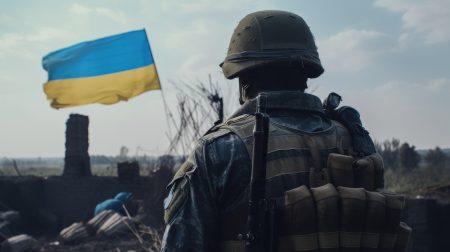




London and Paris have signed a declaration of intent to deploy troops to Ukraine in the event of a peace agreement with Russia. However, the target number of soldiers has been sharply revised downward—from an initially planned 64,000 to just 15,000—a reduction experts attribute to the limitations of both countries’ military capacities.
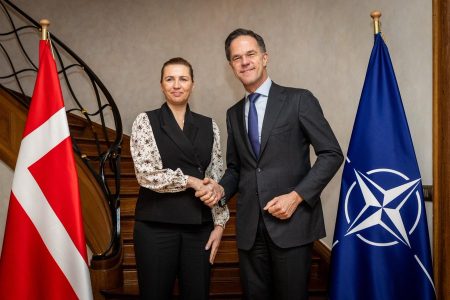
British Prime Minister Keir Starmer and French President Emmanuel Macron formalized the joint declaration in Paris on January 6, in the presence of Ukrainian President Volodymyr Zelensky. The mission aims to establish security centers and deter future aggression from Moscow through monitoring the ceasefire, training Ukrainian forces, and providing long-term arms support.
Originally, plans called for sending 10,000 British troops as part of a 64,000-strong “Coalition of the Willing.” According to The Times, the final proposal limits the total contingent to 15,000 soldiers from both countries. British Ministry of Defence sources indicate that the UK will contribute fewer than 7,500 troops—an operationally heavy burden for a regular army of around 71,000 trained soldiers.
“Fifteen thousand troops is far less than any military contingent ever deployed in Afghanistan or Iraq. It is purely symbolic, with no practical application. It isn’t even enough to control the front line,” says Mariusz Marszałkowski, deputy editor-in-chief of Defence24.
He notes that past deployments focused on “stabilizing areas controlled by extremist groups, jihadists, and terrorist organizations—not a country-aggressor fully equipped with conventional military forces.”
The French portion of the contingent is set to be stationed in western Ukraine, away from the front line. Germany is also being considered for support, potentially positioning its forces in neighboring Poland or Romania.
Three reasons why America is indispensable
The deployment of forces is intended to reinforce Ukraine’s 800,000-strong army in the face of potential incursions by Russia. NATO troops will be stationed largely in western Ukraine. Their presence is meant to ensure security without engaging in combat operations. The mission also envisions the creation of centers for the safe storage of weapons and support for the country’s reconstruction after losses estimated at $800 billion.
However, the entire mission is planned without U.S. military involvement—a significant concern, according to experts.
Mariusz Marszałkowski highlights three key reasons why U.S. participation is indispensable. First, American forces have “the most experience in conducting stabilization and military missions,” with soldiers who have participated in the largest number of combat operations. Second, the United States possesses the most advanced intelligence capabilities.
“Without American intelligence support, operating such a coalition in Ukraine would be much more difficult, as the U.S. has access to a wide range of information and sources that could warn against potential threats,” explains Marszałkowski.
The third factor is the authority of a superpower.
“The Russians respect them, if only because they lost the Cold War, and the Americans became hegemonic victors,” he adds, emphasizing that while Moscow has learned to manipulate Europeans, “it’s different with the Americans.”
Russian tactics: intimidation without crossing the line
Experts point out that the Russians often make bold threats, but when it comes to crossing certain lines, they frequently do not follow through.
“We’ve seen over the past four years that Ukrainians have repeatedly tested Russian intimidation and threats, and more often than not, it simply led to Russia intensifying its attacks on Ukraine,” the expert notes.
Still, Moscow is expected to prepare for potential missions.
“Expect displays of greater force and provocations using various methods—both traditional, like troops, naval deployments, and aircraft flights, which they are already employing, and more modern approaches, such as drones or intensified sabotage operations,” the expert explains
Orieshnik as a signal to Europe
Russia may respond to the presence of foreign troops with provocations and intimidation tactics. The Orieshnik strike in western Ukraine is precisely such a signal.
“This isn’t a response to any Ukrainian action. It’s not even aimed at the Americans. It’s a message directed at Europeans in the context of discussions about the military contingent,” the expert explains.
The Orieshnik is a medium-range missile with a range of 5,000–6,000 kilometers.
“So, it’s not really intended, colloquially speaking, for the Americans, but for the Europeans,” the analyst emphasizes, adding that its operational pattern is identical to that of intercontinental ballistic missiles, only with a shorter range.
Moscow flatly rejects foreign troops
Russia has categorically rejected the presence of British and French soldiers on Ukrainian soil. The Russian ambassador to the UK stated that Moscow “will not accept” foreign troops under any peace agreement, viewing them as both an obstacle to lasting peace and a potential provocation.
Critics highlight major issues with the initiative, including insufficient troop numbers and strategic paradoxes in the deterrence plan. Reports suggest that the proposed 15,000-strong contingent may be “optimistic” and dependent on the outcome of ongoing peace negotiations.
A key point of controversy is the absence of formal U.S. involvement. While U.S. envoy Steve Witkoff participated in discussions, Washington did not commit to deploying troops, even though it is expected to play a role in overseeing the ceasefire. Earlier drafts had proposed limiting the Ukrainian army to 600,000, a plan rejected by Kyiv.
Experts note that Russians would almost certainly avoid attacking American troops, but European forces could be targeted.
“European public opinion is far easier to manipulate. Internal political divisions can be exploited in a straightforward way,” the analyst warns.
Europe remains deeply divided politically, with populist parties gaining increasing support.
“This, of course, is extremely advantageous for Russia,” the analyst concludes.
Goal: exert social pressure on the West
According to the analyst, Russia’s actions will be aimed primarily at shaping public opinion. As people start dying in sabotage-related incidents or lose access to essential services, “based on past experience, this is likely to prompt the public to push for normalization with Russia rather than for escalation.”
“The longer the debate over sending troops to Ukraine continues, the more time Russia will have to prepare for any potential deployment,” the expert warns.
If troops are actually sent, Russia may seek to harm or intimidate them, “so that the West perceives the deployment as wrong or unacceptable, encouraging soldiers to return home. Such an outcome could be framed as a victory,” the analyst concludes.