


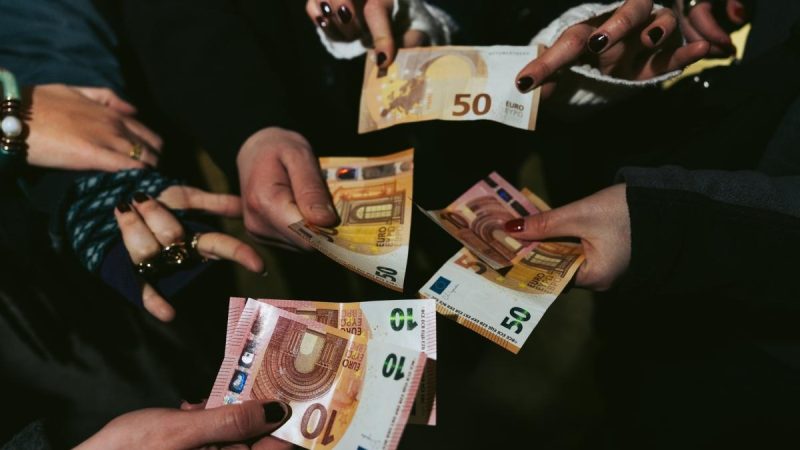
On January 1, Bulgaria became the latest country to adopt the euro, bringing the Eurozone to 21 member states. Meanwhile, Poland continues to delay steps toward joining the Eurogroup. Is that the right decision?
By joining the euro, Bulgaria enters a group that still excludes six EU countries: Denmark (which has an opt-out clause), Poland, the Czech Republic, Hungary, Romania, and Sweden.
“This is a historic moment for the country and an important opportunity for people and businesses across the euro area. Switching to the euro will make the economy more stable, transactions smoother, and European integration stronger,” the European Central Bank said in a statement.
The ECB added that adopting the euro will allow Bulgaria to “build stronger foundations for long-term growth and resilience.” Among the benefits highlighted:
- Economic resilience: adopting a “stable and trusted currency that protects savings and purchasing power.”
- European integration: joining the Eurogroup, where many key decisions for the EU are made.
- Eurozone growth: stimulating trade and investment to boost development across the entire currency area.
The conversion rate was set at BGN 1.95583 = EUR 1, meaning Bulgarians will receive one euro for just under two leva. Until the end of June, exchanges can be made free of charge at commercial banks and some post offices. After that, fees may apply, though bank accounts in leva were automatically converted to euros on January 1.
The lev had been Bulgaria’s currency since 1981 and had been pegged to European currencies since 1997—first to the German mark, and later to the euro. Public opinion in Bulgaria is divided: roughly half of Bulgarians support joining the euro, while the other half oppose it.
V4 still mostly sticking to their own currencies
BBC, reporting on Bulgaria’s entry into the euro, notes that the EU’s poorest country has overtaken much wealthier, economically stronger, and longer-standing members such as the Czech Republic, Poland, and Hungary.
The Czech Republic continues to cling to the koruna. Under the relatively pro-EU government of Petr Fiala, discussion about adopting the euro had reignited, but after the return to power last month of populist Andrej Babiš, the topic has faded once again. His party, ANO, entered a coalition with eurosceptic groups Freedom and Direct Democracy (SPD) and Drivers for Themselves. The coalition agreement stipulates that the new government will take no steps toward adopting the euro.
Poland, by contrast, saw the return to power in 2023 of a coalition led by former President of the European Council Donald Tusk. His first government (2007–2011) described joining the eurozone as “a matter of strategic interest.” As early as September 2008, the target date for switching currencies was set for 2011.
The current government, however, is less assertive on the matter, reflecting a lack of enthusiasm among Poles for the European currency. According to the latest IBRiS survey for Rzeczpospolita, the vast majority of citizens see no need to replace the złoty with the euro in the next decade.
Some 62% oppose joining the eurozone, with nearly 44% strongly against it. Only 28.5% support adopting the euro, including just 10.5% who strongly favor it.
“We must prepare properly for this change so that the transition to a common currency is safe for the economy and as beneficial as possible for ordinary people,” Tusk said in his post-election 2007 exposé.
In January 2014, shortly after the eurozone crisis and just under a year before taking office as President of the European Council, Tusk argued that Poland’s entry into the eurozone would not be safe for Polish citizens. He acknowledged that he supported joining the euro, but “certainly not in the near term, but within the perspective I can imagine.”
The PiS government was generally skeptical of the euro and avoided debate on the topic, concerned about social tensions. In November 2022, Jarosław Kaczyński did not rule out joining the Eurogroup in the future, but stated that adopting the euro “is a measure we cannot take at this time.”
“Even if we were to consider it in the near term, it would only be possible if (…) the Polish economy strengthens enough for global markets to value our currency much higher, because currency strength is in some measure a reflection of economic strength,” he explained.
After returning to power in 2023, Tusk, aware of public sentiment, also avoided reopening the debate. In the annual parliamentary address on Poland’s foreign policy goals in April 2025, Foreign Minister Radosław Sikorski made no mention of prospects for joining the eurozone.
Meanwhile, President Karol Nawrocki, in his inaugural address to the National Assembly on August 6, 2025, stated that his program involves saying “no” to illegal migration and the euro, and “yes” to the Polish złoty.
Poland still falls short of Euro criteria
The 1992 Maastricht Treaty stipulates that every EU member state is obliged to adopt the common currency once it meets the convergence criteria. These include—alongside central bank independence – price stability, sound public finances, exchange rate stability, and long-term interest rate levels.
The only country exempt from this obligation is Denmark. After rejecting the Maastricht Treaty in a 1992 referendum, it secured a permanent opt-out, though this does not preclude eventual entry into the eurozone, provided it meets the necessary economic criteria.
To adopt the euro, a state must generally meet the so-called convergence criteria, which include:
- Price stability: the average inflation rate over the previous year must not exceed by more than 1.5 percentage points the average inflation of the three EU member states with the most stable prices.
- Sound public finances: no excessive budget deficit (under 3% of GDP) and public debt not exceeding 60% of GDP.
- Exchange rate stability: participation in the ERM II mechanism for at least two years without severe tensions or devaluation.
- Long-term interest rate stability: long-term rates must not exceed by more than 2 percentage points those of the three EU countries with the most stable prices.
- Legal compatibility: national laws must comply with EU law, particularly regarding central bank independence.
According to the latest 2024 convergence report, Poland currently meets none of these criteria. On the legal front, the European Commission identifies discrepancies regarding central bank independence, the prohibition of monetary financing, and integration with the European System of Central Banks. The report also flags issues in the Polish central bank law concerning independence.
Regarding price stability, Poland’s average inflation over the 12 months up to May 2024 was 6.1%, well above the reference value of 4.1%. In terms of the budget deficit, Poland remains under the excessive deficit procedure, with a deficit of 5.1% in 2023.
Public debt, which stood at 49.6% of GDP in 2023, was projected in the report to rise to 57.7% by the previous year (it actually reached 58.1%, according to Eurostat), and could climb to 85% by 2034.
The złoty does not participate in ERM II. The report notes that Poland uses a floating exchange rate system that allows the central bank to intervene in the currency market. Throughout 2022, the złoty traded against the euro at its weakest levels in nearly two decades, “amid heightened risk aversion linked to Russia’s full-scale invasion of Ukraine.”
Poland also fails the convergence criterion for long-term interest rates. The average long-term interest rate over the 12 months up to May 2024 was 5.6%, slightly above the reference value of 5.5%. The report notes that long-term rates continued rising in 2022, peaking at 7.8% in October – the highest level since 2002.
What Polish government says today
In response to a parliamentary inquiry from Olga Semeniuk-Patkowska of PiS, the Ministry of Finance stated that, while Poland is ultimately obliged to adopt the euro, the government does not plan to take steps in this direction in the near future.
“As a member state of the European Union, Poland, like other EU countries, is obliged to adopt the common currency once it meets the Maastricht Treaty convergence criteria. The only exception is a country with an opt-out clause, namely Denmark,” the ministry wrote.
It also emphasized that Poland’s commitment to adopt the euro stems directly from the 2003 accession referendum, in which citizens voted in favor of joining the EU with the status of a country with a derogation.
According to the ministry, Article 90 of the Constitution does not allow for repeating a referendum on ratifying the same international agreement if the first referendum was binding and decisive.
At the same time, the ministry stressed that the government “does not currently plan to submit a formal application to begin the process of euro adoption under the ERM II mechanism.”
Finance Minister Andrzej Domański also stated last year at a meeting of the EU Economic and Financial Affairs Council (ECOFIN) that Poland “is not working on joining the eurozone.”
Polish right warns of sovereignty loss
Polish MEPs remain divided over the country’s potential entry into the eurozone, though most of those we spoke with agree it is not a priority in the near future. The most skeptical are MEPs from the right.
According to Jadwiga Wiśniewska, delaying euro adoption is “the right approach.”
“I strongly support the Polish złoty, which allows us to grow and provides protection in times of crisis,” the PiS MEP emphasizes.
“Poland needs its own strong currency, not the euro, which would effectively strip us of sovereignty. Today, the euro is profitable only for Germany and for groups of people who seek to speculate,” she adds.
Her party colleague and Budget Committee member in the European Parliament, Bogdan Rzońca, argues:
“We cannot join the eurozone now because economic crises affect both countries inside and outside the euro. As long as we have our own currency, the złoty, we have more flexibility and can respond faster to crises that affect European countries. In practice, national governments are the first to mitigate the impact of crises, not the European Union as a whole.”
Anna Bryłka, an MEP from Confederation, cites a recent Cluster17 survey showing that only 14% of Poles would support adopting the euro, while 72% are opposed.
“Poles are a wise nation, fully aware of the costs of giving up their own currency, as seen in other countries, including our neighbors. Monetary sovereignty is, in practice, a one-way street, and once dependency is created, it is extremely difficult to escape,” she notes.
She adds that while Bulgarians “of course have the right to do what they see as beneficial for themselves,” she prefers Poland to remain like Sweden or Denmark—prosperous countries keeping their own currency despite external pressure.
The center is open: “More benefits than problems”
More open to euro adoption are socialist and liberal MEPs, though they acknowledge that, given public reluctance, the issue is unlikely to gain traction.
Michał Kobosko points out that if we speak of a “multi-speed Europe,” the eurozone forms the “first group.”
“That is where decisions are made that shape the development of the European economy,” says the Poland 2050 MEP.
He stresses that he has not changed his position on joining the euro for years, but worries that Poland has not yet started preparations.
“This is a process of at least several years. We need to meet the criteria, which we currently do not. Among other things, the Polish Constitution would have to be amended,” he notes.
At the same time, Kobosko sees no reason for Poland to “remain isolated at the very back of the line.” “Do we really need to feel inferior to Bulgaria?” he asks rhetorically.
“Poles have long been scared by hysterical propaganda about how the euro will destroy our economy and bring ‘eurowa’ price hikes. Nothing of the sort happens in countries that adopt the euro,” he adds.
From the perspective of Polish businesses, travelers, and workers across Europe, the euro would bring far more benefits than problems, he argues.
Robert Biedroń concurs: “By joining the EU, under Maastricht criteria, we committed to joining the eurozone, and many experts have demonstrated the economic benefits of joining the common currency area.”
He also recalls the pandemic period, when inflation in Poland was significantly higher than in eurozone countries.
“However, it is the duty of politicians to listen to voters, who currently, for various reasons, oppose this decision. So, for the moment, the issue is off the table,” he concludes.